


Understanding what truly makes a house feel like a home for your tenants can help them feel settled in your property – which naturally reduces void periods and helps protect your rental income long-term. And new research from Simply Business shows that most renters prioritise practical features over expensive upgrades.
But knowing exactly what areas to focus on – and when – can still be difficult. Here’s what tenants are looking for in 2026 – plus how you can manage your budget, stay compliant, and help keep your property safe.
The most important features in a rental property 2026 – revealed
A survey of 500 private renters in the UK where asked what features are most important to them in a rental property. Here’s what they told us.
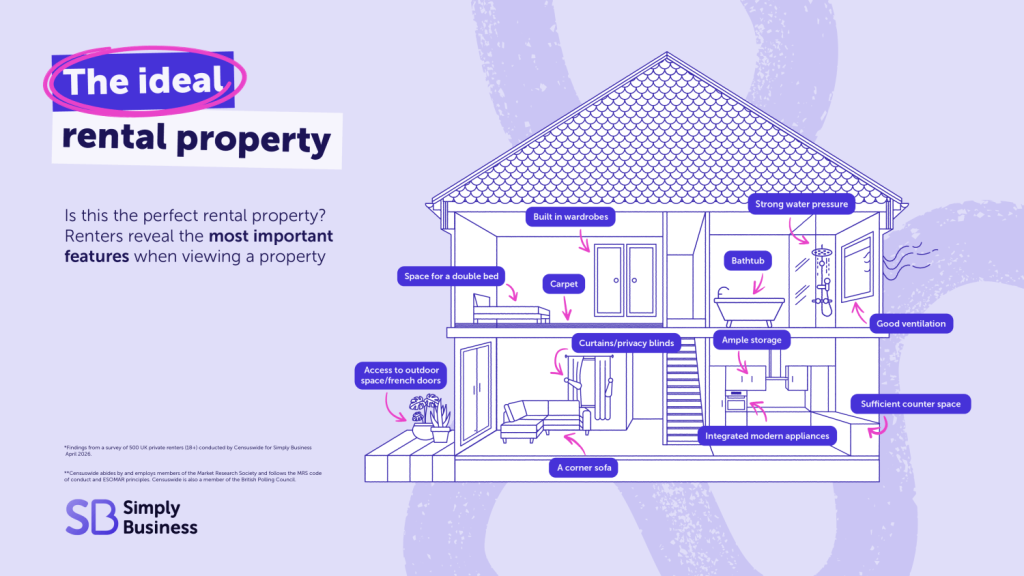
Kitchen – top 3
- Sufficient counter space: 50%
- Ample storage: 41%
- Natural light: 40%
Bathroom – top 3
- Good ventilation: 41%
- Good water pressure: 40%
- Bathtub: 35%
Bedroom – top 3
- Space for a double bed: 67%
- Natural light: 46%
- Built‑in wardrobes: 45%
Living room – top 3
- Large windows: 43%
- Space for a corner sofa: 27%
- French doors/outdoor access: 26%
For landlords, the message is clear: simple, functional improvements often matter more than high-end redesigns – knowing where your money will make the biggest difference for your tenants.
Who’s responsible for decorating a rental property?
Landlords are normally responsible for decorating a rental property. It’s rare for a tenant to redecorate at the end of a tenancy, though it’s sometimes written into their tenancy agreement.
You have a duty to rent out a property in a safe, habitable condition. Tenants must look after the property and return it in the condition they found it, minus fair wear and tear.
If a tenant damages the interior, you might be able to use part of their deposit to pay for repairs. But you can’t make adeposit deduction for normal wear and tear. You’ll need to cover the cost of general redecoration yourself.
Read more: Landlord responsibilities – a guide to property maintenance and repair
How often should a landlord paint?
There’s no law stating how often you must repaint a rental property. But keeping the property in good condition benefits your current tenants and makes it easier to market when empty.
Many landlords choose to repaint or fully redecorate once every five to six years. If you have long-term tenants, redecorating while they live there can be highly disruptive – so you should negotiate times carefully and get their permission before starting any work.
When should a landlord replace carpet?
There’s no carpet replacement law in the UK. Most landlords review the carpets in their rental properties approximately every five years.
The lifespan of a carpet depends on its quality. A high-quality carpet could last up to 10 years, while a budget option might only last three to five years. It also depends on the type of tenant. A student house share will likely see much more footfall than a flat rented by a single professional.
If the carpet is badly stained or damaged when a tenancy ends, you may be able to charge the tenant for a deep clean, repair, or replacement. But you must have a thorough inventory and photos from the start of the tenancy to prove it’s not just fair wear and tear.
How often should a landlord replace a kitchen or bathroom?
During a tenancy, you might need to make urgent repairs like fixing an oven or replacing a fridge. But most kitchens in rental properties will last at least 10 years before needing a full refurbishment. Hard-wearing floors and non-scratch surfaces can give the kitchen more longevity.
Bathrooms need regular maintenance to make sure the plumbing works and the space remains free from damp. You should plan to replace the main bathroom fixtures roughly every 10 years.
This lines up with the latest Simply Business research, with renters most likely to value counter space, storage, and natural light. In bathrooms, they care more about ventilation and water pressure than premium extras.
Upgrading these key rooms can add significant value to your property. But renovations require time and money, so they should remain the landlord’s responsibility rather than a job for the tenant.
Should you let tenants redecorate?
A tenant may ask if they can redecorate the property themselves. Giving a long-term tenant the chance to put their stamp on the home can encourage them to stay longer – but you should approach this with caution.
Tenants don’t view your property as a financial investment, and you don’t know if their decorating skills are up to standard. They should never redecorate without getting your written permission first.
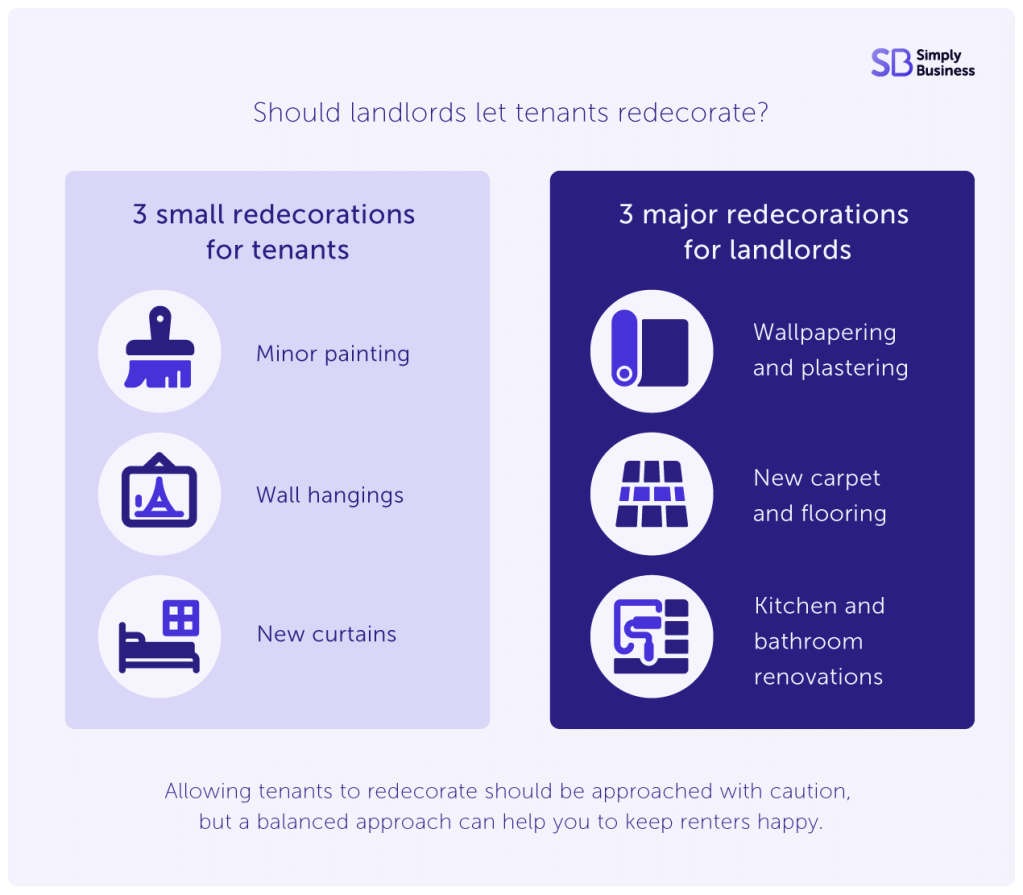
You could agree to small changes that do not affect the relet potential of the property. This could include minor painting, putting up shelves with damage-free hooks, or hanging new curtains. You should avoid letting tenants attempt major jobs like plastering or fitting new flooring.

Help protect your property investment
Staying on top of your redecorating schedule is a simple way to help protect the value of your property. By dealing with wear and tear promptly, you can make sure your rental home remains compliant, safe, and attractive to quality tenants.
You can also help to protect your property through landlord insurance.
Landlords can get insurance cover for accidental damage to their property as well as for home emergencies.
Read more: What is landlord insurance? Covers, costs, and benefits explained
Promotion
5 tips for refreshing your rental property
If you’re planning to update your rental property, a few simple strategies can make the process easier:
- Prioritise practical improvements – our report shows that renters often value counter space, storage, ventilation, and natural light more than luxury features.
- Stick to neutral colours – unusual paint choices can put off prospective tenants. White or magnolia walls create a clean blank canvas.
- Buy quality appliances – spending a bit extra on a washing machine or oven can often save you money because they last longer and break down less frequently.
- Keep detailed records – documenting exactly when you bought items or redecorated helps if you ever need to make a deposit deduction.
- Focus on layout and usability – features like space for a double bed or a comfortable living area can make a bigger difference than decorative trends.
Following current tenant preferences like those outlined in our report can also guide your spending. In many cases, straightforward updates are enough to make a property more appealing.

Property maintenance FAQs
What counts as fair wear and tear?
Fair wear and tear refers to the gradual deterioration of a property and its fixtures over time through normal use. It includes faded paint, minor scuffs on walls, or worn carpets. Landlords cannot charge tenants for this type of damage.
Can I claim redecorating costs against my tax bill?
You can usually deduct the cost of repairs and maintenance from your rental income to reduce your income tax bill. This covers routine redecorating, fixing broken items, and replacing standard fixtures. But you can’t claim for improvements that add significant value to the property.
How do I help protect my property during a tenancy?
Carrying out regular, scheduled property inspections helps you spot maintenance issues early. You should also consider taking out comprehensive landlord insurance to help protect your investment. This can cover accidental damage, loss of rent, and liability claims.
More guides for landlords
- A landlord’s guide to UK property access rights
- Landlord electrical safety certificate – is it time to renew your EICR?
- Energy efficiency guide for landlords – what is an EPC rating?
- Landlord end of tenancy checklist – here’s what you need to do
Get set with tailored landlord cover
Over 200,000 UK landlord policies, a 9/10 customer rating and claims handled by an award-winning team. Looking to switch or start a new policy? Run a quick landlord insurance quote today.
*Findings from a survey of 500 UK private renters (18+) conducted by Censuswide for Simply Business April 2026.
**Censuswide abides by and employs members of the Market Research Society and follows the MRS code of conduct and ESOMAR principles. Censuswide is also a member of the British Polling Council.