


To advertise your business effectively, build an authentic brand, choose one or two marketing channels you can keep up with, and focus on helping people rather than selling. Storytelling, consistency, and genuine community-building beat big budgets every time, as the three small business owners in this guide prove.
Marketing your business can feel overwhelming. There are dozens of channels, endless advice about algorithms, and a constant worry that you’re not doing enough. But here’s the good news – you don’t need a huge budget or a marketing degree to get results.
At its core, marketing is about building relationships with your customers. Without it, you’ll struggle to get people to buy your product or use your services. The trick is finding what works for your business, then doing it consistently.
This guide bridges the gap between theory and practice. We’ll cover the basics of building a brand, choosing your marketing channels, and creating a strategy.
And we’ll learn from three small business owners – Lucy Hitchcock of Partner in Wine, Beth Jackson from Off the Cut Studios, and Fay Phillips-Jones of Coaching with Fay – who grew their businesses using authentic content and genuine connection.
How do I create a brand for my small business?
A brand is what sets your business apart from your competitors and what encourages people to buy from you.
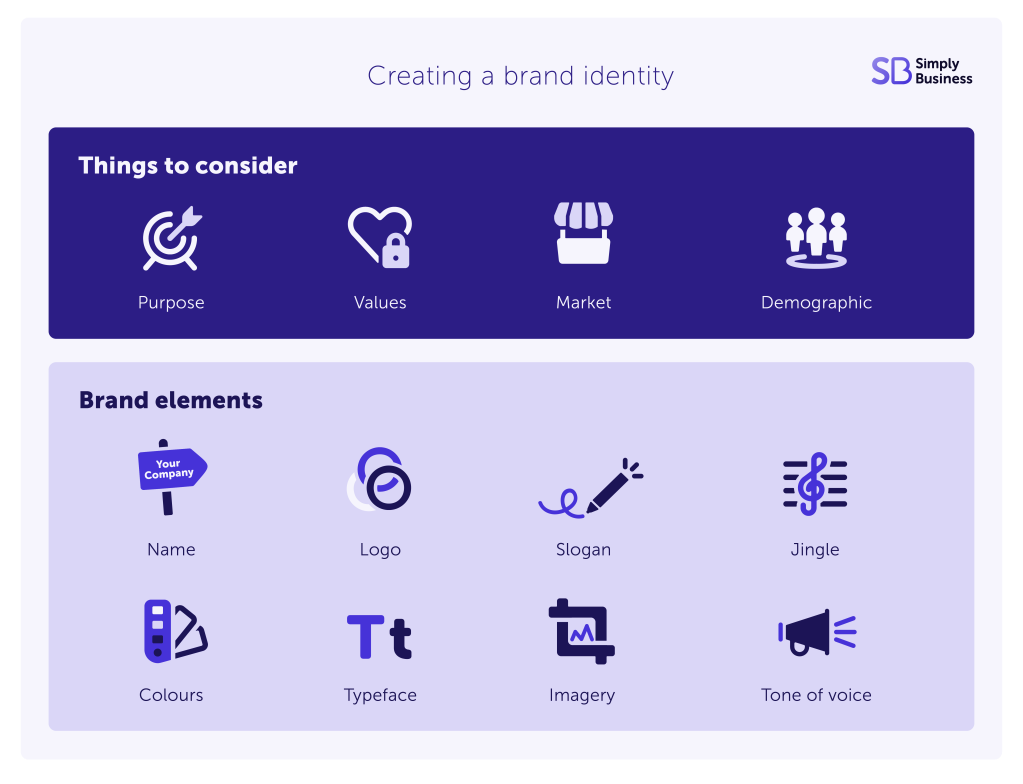
Here are five things to think about when developing your brand positioning:
- Design a brand identity: This is the consistent look and feel of your business – your logo, colours, words, and taglines. These elements help customers remember you.
- Tell your story: People buy from people. Sharing the story behind your business helps you connect with customers and tap into their emotions. What inspired you? What problem are you solving?
- Communicate your mission: Explain what your business does and why. A clear mission helps you make decisions and connects customers to the ‘why’ behind your brand.
- Find your tone of voice: Your writing should be consistent and reflect how you want people to feel. Will you be formal or informal? Will you use humour?
Why storytelling is the heart of good branding
Lucy Hitchcock, founder of Partner in Wine and digital marketing agency Sassy Digital, built her business on storytelling. She came up with her insulated wine bottle during the 2020 lockdowns, when she couldn’t find a way to keep a bottle cool on a day out.
But it was her content strategy that propelled Partner in Wine into retailers like Selfridges and Liberty.
“The basis of any good marketing is storytelling,” Lucy said. “When I launched, people were excited because they got to see the end result of the storytelling I’d done over such a large period of time.”
Her side hustle took the next step when one of her TikToks went viral. It was a simple video, explaining how she started her business and it resonated with people instantly.
The goal of telling your brand story is to connect with your audience, so they understand more about your business than just what you sell. Think about how you could explain how and why you started in a compelling way.

What are the best marketing channels for a small business?
There are lots of ways to get your message to potential customers. These are known as marketing channels. The ones you choose will depend on the type of business you have and where your customers spend their time.
You’ll likely want to test a mix of these channels:
- social media: from Facebook and Instagram to TikTok, social media lets you talk directly to customers in a relaxed way. You can pay to boost posts too, though it can be tricky to reach the right people
- email: email marketing and newsletters help you stay in touch with customers, sharing updates, offers, and important information – but you’ll still need a way for customers to find and subscribe to your emails first
- SEO: search engine optimisation means improving your website so it gets more visitors from search engines like Google. There are plenty of free tools to help you get started
- GEO: an evolution of SEO, GEO (or generative engine optimisation) improves your visibility on AI models and chatbots, like ChatGPT and Gemini
- content and blogs: content marketing means creating useful content – blog posts, podcasts, or videos – that answers your customers’ questions
- “traditional” marketing: this covers printed materials like flyers and business cards, as well as newspaper and radio ads, billboards, and direct mail
- digital ads: pay per click (PPC) ads charge you each time someone clicks, and affiliate marketing means paying other websites to link to yours
- influencers: working with content creators who have an engaged following can put your product in front of new audiences
- events: pop-up stalls, trade shows, or your own launch event can help you attract new customers
- word of mouth and networking: a strong network can grow your business through recommendations, help you find good deals, and deepen your understanding of your market
You don’t need to use all of these. In fact, spreading yourself too thin is one of the most common mistakes small business owners make.
Why choosing one platform often beats being everywhere
Fay Phillips-Jones, founder of Coaching with Fay, learned this the hard way. An HR career coach and former executive search director, she launched her business in 2020 with no marketing experience. Fay writes…
The truth is, I didn’t have a marketing bone in my body. But when I launched Coaching with Fay as a side hustle in 2020, I suddenly found myself responsible for all of it.
I tried everything. Different platforms, content styles, tones, and audiences. I spent hours creating Canva graphics, tweaking wording, and trying to make posts look perfect.
Very little seemed to happen.
The only things that were working were referrals and word of mouth.
Things changed when I left my corporate career at the end of 2024 and became a limited company in early 2025. I realised I wasn’t just a coach anymore – I had become the Chief Marketing Officer as well.
That’s when I stopped trying to be everywhere.
I chose one primary platform, LinkedIn, and focused my energy there. I started sharing authentic client stories, practical career advice, and reflections from my work. I created themes and recurring content rather than constantly reinventing the wheel. I developed a rhythm that worked for me.
Looking back, I spent far too much time worrying about the algorithm and not enough time thinking about the person reading the post.
What I’ve learned is that marketing isn’t really about promotion. It’s about building trust at scale.
People rarely invest in coaching because they saw one promotional post. More often, they’ve followed your content for weeks, months, or sometimes years. They’re quietly observing how you show up, how you help people, and whether they feel a connection to you.
Some of my clients tell me “I’ve been following your content for ages” or “your recent post really resonated with me.” Often these are people who have never liked, commented on, or shared a single post.
That’s why I always remind small business owners not to become obsessed with likes and impressions. Someone, somewhere, may be quietly paying attention.
Today, LinkedIn generates the majority of my enquiries and has helped me build a community of more than 15,000 followers. I haven’t relied on paid advertising, complex funnels, or large marketing budgets. Instead, the business has grown organically through consistent content, referrals, recommendations, and relationships built over time.
Ironically, the less I’ve focused on selling, the more enquiries I’ve received.
Follow Fay on LinkedIn for career advice, HR insights, and practical LinkedIn inspiration.
How do I build a community around my business?
Building a community means making people feel connected to your business. Your community is made up of people who relate to your story and like your product – but it also includes other small business owners.
Lucy’s advice is to “make content that makes people feel something, whether it’s entertaining, inspiring, or educational.”
Here’s the journey she suggests taking your customers on:
- Create content that makes people feel something – entertained, inspired, or educated.
- People share your story with others, because feelings are easier to relate to than facts.
- Those shared stories spread beyond the internet, and that’s where a community begins.
Building a community brings real benefits, including new clients, increased brand awareness, stronger customer relationships, and valuable partnerships.
Why being useful matters more than being visible
Fay’s approach to community comes down to one simple question: “what would genuinely help someone today?”
Most of her content comes from real conversations with clients, common challenges, and lessons she’s learned herself. She rarely sits down and thinks, “what can I post to get clients?”
“People respond to authenticity,” she said. She shares unedited photos taken on her phone, because that’s what real life looks like. And when it’s half term and she doesn’t post, she doesn’t worry about it. “I’m a one-person business – why would I be posting when my out-of-office is on?”
Her advice for small business owners is refreshingly simple. Focus on being useful before being visible. Don’t obsess over follower counts. Be patient, because relationship-led marketing is sustainable, even if it’s not the fastest route.
“The less I’ve focused on selling, the more enquiries I’ve received,” she said.

“I also create content that speaks directly to my target audience. The more specific your voice is, the more people feel as though you’re talking to them, not at them. When your content reflects their real challenges, language, and lived experience, engagement naturally increases because it feels relevant, personal, and genuinely helpful.”
Fay Phillips-Jones
Founder of Coaching with Fay
How do I create content pillars and come up with ideas?
To engage your community, you’ll need content pillars. Think of a pillar as a category that helps structure your content. You take aspects of your business and build around them.
For Partner in Wine, Lucy’s pillars are wine, small business, and her products. Every piece of content she creates falls into one of these categories. The benefit is that your content stays focused on your audience’s interests.
Lucy recommends three or four pillars, then using those as the basis for your storytelling. Once you’ve defined them, here are a few ways to get creative:
- explore your industry – share your expertise and educate your audience, or even debunk common myths in your field
- show your product – one of Lucy’s most successful TikToks simply showed how to use her wine bottle, don’t be afraid to show people what your product does
- tell your story – Lucy suggests sharing your story once a week. “It doesn’t have to be big things, just share your excitement so people feel engaged”
- be authentic – people like real, not always polished, content. Let people get to know the person behind the business.
- entertain your followers – people use social media to be entertained. Reacting to current trends is a good way to stay relevant
Why creativity and consistency win on social media
Beth Jackson, founder of Off the Cut Studios, grew her rug-making business on TikTok – with no strategy at all to begin with. Since then, she’s amassed over 270,000 likes on TikTok. Here she shares what she’s learnt…
After finishing my art degree during lockdown, I started making rugs as a hobby and sharing my work online. Before long, people were messaging me for custom orders. But even then – it took a year or two before I got over the imposter syndrome and saw it as a real business.
In the beginning, my TikTok was very much trial and error. Posting different things, seeing what resonated, and learning as I went.
I’ve had a few semi-viral moments, which are exciting and can bring a certain satisfaction and even an influx of orders, but this doesn’t usually last and isn’t sustainable growth.
My biggest advice for marketing on TikTok is to not overthink it. There’s so much advice online about algorithms, trends, and the ‘right’ way to do TikTok that it can stop people from posting altogether. The most important thing is to just start, be consistent, and let your personality come through.
The real value for me has been building a community of people who follow my journey over time.
Paying attention to my TikTok comments even sparked a new product. I realised a large part of my audience were creatives themselves, not just customers. So many people wanted to try rug making that it gave me the idea to create rug-making kits.
Ultimately, everything changed when I started having fun with my content rather than worrying about perfection. People can tell when you’re genuinely enjoying what you’re making, and that’s often what makes them stop scrolling.
How do I build and manage online reviews?
Customer reviews are an important part of your online marketing. They let potential customers see what others think of your business, whether that’s positive, negative, or neutral.
Asking happy customers to leave a review – in a thank you email, on a delivery note, or when you finish a job – is a great way to build your reputation. It’s best to focus on one or two platforms rather than spreading yourself thin.
Here are some popular review platforms to consider:
- Google: your average star rating can appear on Google’s search page when someone looks up your business, along with a link to the reviews
- Trustpilot: any product or service business can build Trustpilot reviews, and the platform highlights verified buyers
- Yelp: popular with restaurants, shops, and beauty and fitness services
- TripAdvisor: a top priority for any hospitality or entertainment business
- Checkatrade: often the first place people look for a tradesperson
Replying to reviews – both good and bad – is good practice. And remember, your reputation is also about keeping customers happy through good service, gathering feedback, and rewarding loyalty.
How do I develop a marketing strategy?
When you start out, your marketing might be a little ad-hoc. That’s fine. But as you grow, a thought-out strategy gives you direction and helps you spot what’s working.
The best small business marketing strategies start with customer research. Here’s what to make time for:
- market research – do a SWOT analysis to identify your strengths, weaknesses, opportunities, and threats. This is also where you look at what competitors are doing
- customer journey mapping – how does a customer find you, and what do they see before they buy? This helps you decide what content to share, and when
- audience personas – a persona is a simple description of your ideal customer. Think about their demographics, interests, challenges, and motivations
- pricing – look at your costs and your competitors to work out a price that gives you a healthy profit
- a local strategy – if your business is location-based, set up a Google Business Profile and keep your opening hours up to date on Google Maps
A good marketing plan gives you a clear direction and a document you can refer back to and update as you grow.

Final thoughts: test, learn, and grow
Finding the right marketing strategy takes time. We’ve covered a range of traditional and digital options here, and some cost more than others.
The thread running through Lucy, Beth, and Fay’s stories is the same. None of them relied on big budgets. They built their businesses on authentic storytelling, consistent content, and genuine connection with their communities.
So start small. Have a plan, budget carefully, and reflect regularly on what’s working – then adapt when you need to. Finding ways to promote your business for free, whether through word of mouth, free tools, or online reviews, is the key to making the most of your budget while growing your brand.
The most important step is the one Beth recommends: “Just start, be consistent, and let your personality come through. People connect with people, and if you have something genuine to share, an audience will find you.”
Marketing FAQs
How can I advertise my business for free?
You can advertise your business for free through several channels. Social media, word of mouth, networking, and online reviews all cost nothing but your time. Setting up a free Google Business Profile helps local customers find you, and creating useful content like blog posts or videos can boost your visibility in search results over time.
How much should a small business spend on marketing?
There’s no fixed figure, and it depends on your budget and goals. The good news is that many effective channels – social media, content, word of mouth, and reviews – are free or low cost. Lucy, Beth, and Fay all grew their businesses without paid advertising. Start with free channels, see what works, then invest carefully where you get results.
What’s the best marketing channel for a small business?
There’s no single best channel – it depends on where your customers spend their time. A visual product business might thrive on TikTok or Instagram, while a service business could do better on LinkedIn. The key lesson from successful small business owners is to choose one or two platforms and stay consistent, rather than spreading yourself too thin.
How long does it take to see results from marketing?
It varies, but relationship-led marketing often takes months rather than days. Fay built her community over years, and Beth spent a year or two before treating her hobby as a business. Be patient and consistent. As Fay puts it, opportunities are often created quietly in the background long before they become visible.
Do I need a marketing strategy from day one?
No. When you start out, it’s fine for your marketing to be ad-hoc. As your business grows, a written strategy gives you direction and helps you track what’s working. Start by getting to know your customers through market research, then build your plan from there.
Looking for more tips from real small business owners?
Ready to set up your cover?
As one of the UK’s biggest business insurance providers, we specialise in public liability insurance and protect more trades than anybody else. Why not take a look now and build a quick, tailored quote?