


So you’re thinking of starting a business? Here are the essential steps you need to get started – whether you’re building a business from scratch or want to make sure you’re doing everything by the book.
Plus firsthand insight from real small business owners as well as data on running a business from our 2026 SME Insights Report.
How to start a business – a summary
To start a successful business in the UK, you must follow these 9 steps:
Real-life tips on how to start a small business
We asked five business owners what it’s really like to start a business. Watch this video for tips, along with their highs and lows of business ownership.
1. Choose your business idea
The first thing you need to do is choose your business idea. It should be something you’re passionate about so you’re happy putting your time, money, and energy into making it a success.
Start by checking if a product or service is viable by looking at Google Trends to see how popular your idea is. You can also use AI tools to help. According to our 2026 SME Insights data, 47% of small business owners already use AI – with 50% using it specifically for coming up with business ideas.
Once you have a basic idea, you can then conduct market research, or even build a blog or social media channel to test if there’s enough interest.
Related guides:
- Small business ideas – best businesses to start yourself
- 7 trending small business ideas for 2025
- 15 of the best home business ideas
- 11 of the best online business ideas
2. Register your business name
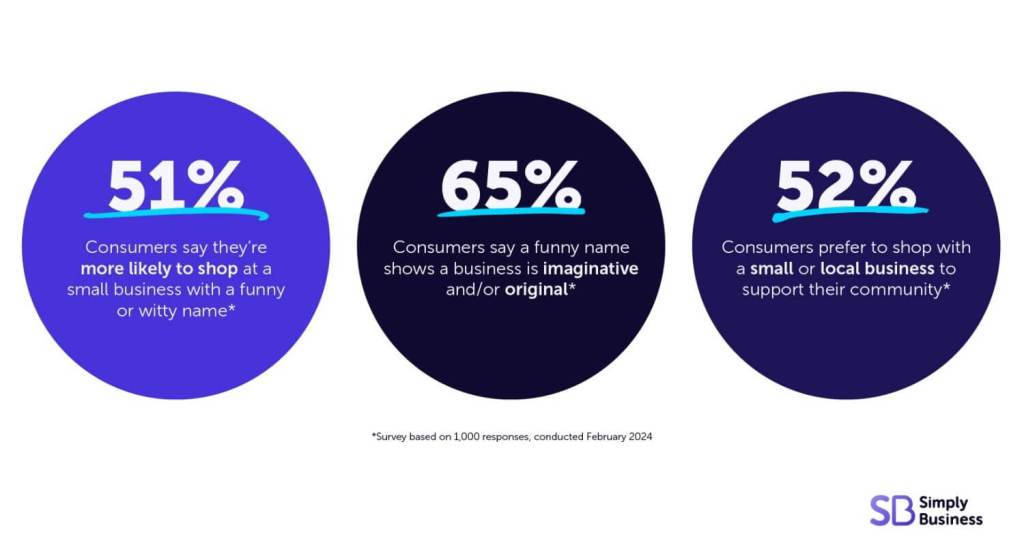
Coming up with a name for your business is an important step as it shows the personality of your brand and helps you stand out. Your name should be unique and appeal to your target audience – and it’s your chance to be creative.
Our winner of Britain’s Best Small Business Name is the perfect example of how important your business’s name can be.
It’s also worth understanding:
- how to define your brand so you can stand out from your competitors
- what you need to do to protect your intellectual property, including any patents and trademarks
3. Choose a legal structure
Next, you’ll need to choose a legal structure for your business:
| Structure type | Liability | Tax and admin complexity | Who it’s best for |
| Sole trader | Personal liability: no distinction between you and the business | Low: requires an annual Self Assessment tax return | Individuals testing a business or working alone |
| Partnership | Shared liability: partners share responsibility for the business debts | Medium: requires a nominated partner to send partnership tax returns | Two or more people starting a business together |
| Limited company | Limited liability: the business is distinct from you, personal assets aren’t at risk if the business gets into debt | High: requires Companies House registration, corporation tax, and company tax returns | Growing businesses wanting financial protection |
If you’re not sure, this guide explains the difference between a sole trader and a limited company.
4. Write a business plan
A business plan is an important document for a business of any size. It helps you to get an idea of your strategic goals, financials, market research, and potential obstacles.
When mapping out potential obstacles in your business plan, keep in mind the top challenges current UK founders face according to our SME Insights data:

48%
unpredictable economic conditions

41%
uncertain consumer demand

35%
high running costs like energy bills
Addressing these early in your financial forecasting will set you up for success.
Creating a roadmap for your venture is essential for securing funding and setting long-term goals. Follow our step-by-step guide to learn how to write a business plan and download a free template to map out your financials.
5. Secure funding and finance
How much money do you need to start a business? It’ll vary depending on your product or service – but you’ll need to think about this question before getting your new venture started.
According to the Simply Business SME Insights Report, 22% of small businesses cite a lack of funding and investment as one of their biggest operational challenges. You might not need much initial investment if you’re starting small, but having a clear strategy is vital.
But if you’ve identified a number of costs in your budget, you should know how you’re going to fund your project. Will you use savings? Or will you ask for help with starting up a new business (for example, loans from friends, family, or a bank)?
How to get money to start a business
Keep in mind you might be able to find grants for new businesses to help lighten the financial burden. The benefit of a small business grant rather than a loan is that you don’t usually have to pay the money back.
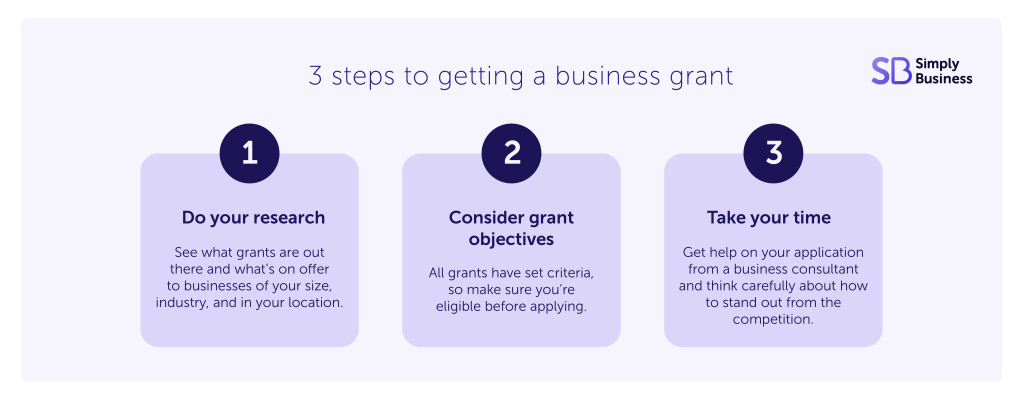
And there’s also the option of taking out a small business loan if that suits you and your financial circumstances. We compared seven small business loans from different lenders to see the pros and cons for small business owners.
Read more: Small business funding and investment: how to grow your business
6. Plan your advertising strategy
Now you’ve sorted your finances, it’s time to think about how you’re going to attract customers and grow your business.
When it comes to advertising a new business, you’ll need to consider marketing, branding, and how you’ll balance online and offline promotion.
Advertising strategy tips
- do competitor research – competitor analysis helps you understand the market, set your prices, and find a way to stand out
- build a social media presence – social media is a great way to showcase your brand’s personality and tone of voice, connect with customers, and even sell your products with tools like TikTok Shop and Instagram
- create a website with SEO – optimise your website for search engines so people can find your business and understand the products or service you offer
- send emails and newsletters – a simple and cost-effective way to keep in touch with your customers and boost sales
- network at industry events – get to know your industry and make connections at virtual or in-person events
- consider AI for marketing: 63% of small business owners are using AI to create content, making it a budget-friendly way to produce promotional materials and copy

7. Buy your new business insurance
Public liability insurance – this is important if customers visit your premises or you carry out work on client sites
Professional indemnity insurance – covers you if a client loses money because you provide negligent advice, services, or designs
Employers’ liability insurance – this is a legal requirement if you have employees legal
Expenses insurance – covers business legal expenses or prosecution fees
Promotion
8. Understand your tax obligations
Running a business comes with legal and accounting responsibilities, so it’s important you’re clear on what’s involved. There’s a £1,000 tax-free allowance, but after that you’re legally required to register with HMRC or Companies House.
And tax administration is evolving, according to our SME Insights data: 19% of small business owners highlight the rollout of Making Tax Digital (MTD) as a major administrative challenge. Keeping accurate digital records early on will help you stay compliant.
Sole traders need to:
- register with HMRC
- submit an annual Self Assessment tax return to pay income tax and National Insurance
Limited companies need to:
- register with Companies House to legally incorporate the business
- pay corporation tax on the profits you make from your business
- file a company tax return
- pay VAT (Value Added Tax) if taxable turnover exceeds the threshold
- as a self-employed person, you’ll also need to send a Self Assessment
One of the benefits of registering as self-employed is you can claim back some of your expenses and reduce your tax bill.
A good way to test your business venture without as much financial risk is to start a business alongside full-time employment – but make sure you understand everything about paying tax when you have a side hustle first.
You may also be able to recoup some of the tax you pay with new business tax relief, such as business rates relief and VAT relief.
Finally, be sure to keep up with all the self-employed tax changes that are introduced in April each year.
9. Create a system for keeping business records
After you’ve worked out what you need to do for tax, it’s important to stay organised so you can meet your tax obligations at various points throughout the tax year.
If you don’t have a record-keeping system, you’ll spend a lot of time sorting paperwork when you have to do your Self Assessment – valuable time that could be spent running your business, or on relaxing and recharging. Read more bookkeeping tips here.

“I really wish I knew about the importance of keeping really detailed accounts before I started and actually buying accountancy software to begin with, rather than doing the traditional pen and paper route because it was very time consuming.”
Abi
Founder of Blackdown Blooms
Firstly, it’s a good idea to keep your business and personal finances separate. That’s because allowances like tax-deductible expenses can only be for business purposes – it’s much harder to separate money coming in and out when you’re using one account.
Many of the major providers offer a business bank account – here are some of the best.
What’s more, there’s lots of software available that can make record-keeping much easier. Software can do tasks like create and send invoices automatically, and monitor your income and outgoings:
Many business owners now use software and automation to simplify bookkeeping – 46% of small business owners who use AI state they use it specifically to save time on everyday admin tasks.
Finally, you’re required to keep business records for a number of years. If HMRC asks for them, accurate and organised business records can help keep you out of trouble in the event of a tax investigation. Read more about how long to keep tax records.
Expert tips from successful business owners
You’ve read our nine steps on how to start a successful business, now you can learn more from some people who have already done it.
How to be a successful entrepreneur
Mark Mciver, CEO and founder of London barbershop SliderCuts, shares his three tips to being a successful entrepreneur.

- Study and work in your industry – know it inside out
- Be honest about your weaknesses – then hire in those areas to build a powerhouse team
- Invest into your idea – back your vision with some funding
Mark Mciver
CEO and founder of London barbershop SliderCuts
Many successful entrepreneurs have a strong instinct for what works and what doesn’t. After all, you know your business better than anyone.
Lucy Hitchcock is owner of Partner in Wine and Sassy Digital. And as the founder of two small businesses, Lucy has this to say to people just starting out: “Lots of people are going to have lots of advice for you when you are first self-employed, and my advice would be not to take it all.
“It’s your career. And it’s your job to do your own research, listen to your gut, and work out what’s best for your journey, your business, and ultimately the path you want to take.”
Challenges of running a business
There’s a whole host of challenges and opportunities that come with running a business. The business owners we spoke to shared how important boundaries are and making sure you manage a schedule so it doesn’t leak into your personal time.
They also spoke about the empowering nature of business ownership and being able to have complete flexibility over your time.

“The biggest challenge for me was the transition from a dark kitchen into somewhere that would be retail ready. That was a very expensive hurdle that we had to overcome. We’re launching into our first nationwide retailer imminently. So it was a big hurdle, but it was worth it.”
Natasha
Founder of The Vegan Patty Lady
‘One thing I wish I’d known…’
We asked business owners about what they wish they’d known before starting their business.
Kim, founder of The Only Way is Grooming, says how important it is that you learn to “trust your instincts” because “you’re the expert”.
And Kamara, co-founder of London-based lashes business TooTone, shared: “One thing we wish we knew was how hard it would be to build relationships with suppliers.
“We didn’t expect to have to sample our product so much just so they could get it right.”
The growth, maturity phase, and side hustles
Starting small is a proven path to growth. According to our SME Insights Report, 18% of small businesses operate as a side hustle alongside other work, while 15% originally started as a side hustle before expanding into a full-time business.
A side hustle allows you to test your business venture with lower financial risk before scaling into new products, hiring staff, or stepping into business maturity.
Quick checklist: starting a business in the UK
| Step | Action required |
| 1. Idea and name | Conduct market research and verify trademark availability |
| 2. Legal structure | Decide between sole trader, partnership, or limited company |
| 3. Registration | Register with HMRC and/or Companies House |
| 4. Funding | Calculate budget and apply for loans or grants if needed |
| 5. Protection | Purchase necessary business insurance |
Frequently asked questions on starting a business
Do I legally need insurance to start a business in the UK?
Employers’ liability insurance is a legal requirement in most cases as soon as you hire staff. Other covers, like public liability insurance and professional indemnity insurance, are usually optional but highly recommended to protect against legal fees and compensation claims.
What are the biggest challenges faced when starting a business in the UK?
According to our SME Insights Report, the three primary challenges facing UK business owners are economic uncertainty (48%), lack of consumer demand (41%), and high running costs such as energy bills (35%).
How many UK businesses start as side hustles?
Our SME Insights data shows that 15% of UK small business owners started as a side hustle before transitioning to full-time, while an additional 18% currently run their business as a side hustle.
Ready to set up your cover?
As one of the UK’s biggest business insurance providers, we specialise in public liability insurance and protect more trades than anybody else. Why not take a look now and build a quick, tailored quote?