
The government has warned that 85,000 tumble dryers are still at risk of fire, urging homeowners and landlords to check if their machine needs an urgent safety repair.
The affected tumble dryers are at risk of internal short circuiting during normal use – which can cause the tumble dryer to ignite.
Affected models are from the manufacturer Haier and includes the following brands:
- Baumatic
- Candy
- Caple
- Haier
- Hoover
- Iberna
- Lamona
- Montpellier
What do landlords need to do next?
If you know the heat pump tumble dryer in your property is one of the above brands, you should contact your tenants immediately and instruct them to not use the machine until it’s been repaired.
If the plug is easily accessible, you can ask your tenants to switch off and unplug the machine – or arrange to do this yourself.
Unsure if your tumble dryer is affected? You should check the model and serial number of the tumble dryer online to check – or ask your tenant to do this.
Owners of at risk appliances should contact the manufacturer to arrange a repair. More information can be found on the government website.
Benefits of using heat pumps in your rental property
Heat pumps can be used in various ways in your rental property – including in tumble dryers and air sources. Below are just a few of the benefits:
- future-proof compliance: improving your property’s energy efficiency boosts your Energy Performance Certificate (EPC) rating, which can help you stay ahead of tightening government Minimum Energy Efficiency Standards (MEES) and protecting the long-term value of your asset
- installation flexibility: heat pump tumble dryers require no external venting or plumbing, meaning they can be placed anywhere without drilling into external walls
- reduced safety liabilities: moving away from gas heating and high-heat drying can eliminate the need for annual gas safety certificates, remove carbon monoxide risks, and lower fire hazards associated with lint buildup in traditional hot dryers
- tenant appeal: energy-efficient homes can be in high demand. By offering appliances that use systems that could lower bills, you can attract energy-conscious tenants who are more likely to stay long-term to keep their living costs down
However, some drawbacks to using heat pumps include the fact that electricity is currently more expensive per unit than gas. Poorly insulated properties or inefficient usage could lead to running costs that are similar to, or slightly higher than, gas boilers.
Landlords can get a cash grant from the government towards replacing their boiler with a greener alternative. This includes an air source heat pump grant that can be used towards the cost of installing a more energy efficient system.
Read on to find out more about the boiler upgrade scheme and how you can apply for funding to make your property more energy efficient.
What is an air source heat pump – and how does it work?
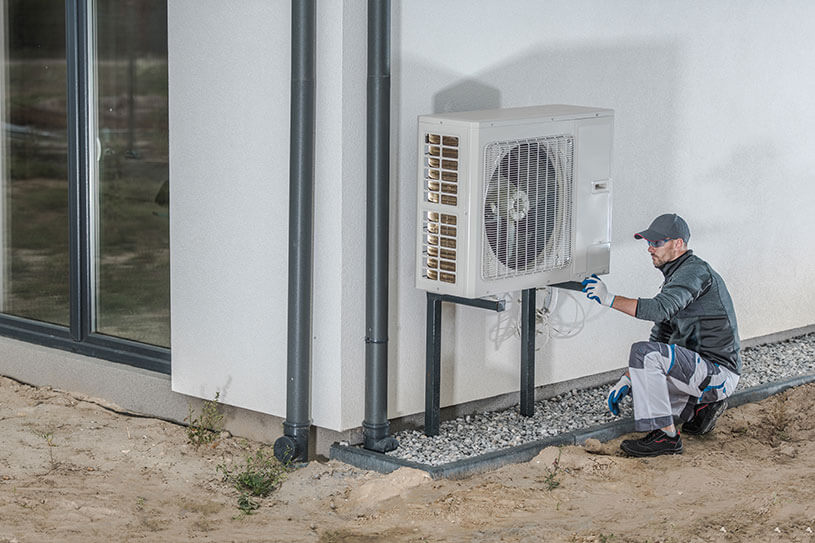
An air source heat pump provides heating and cooling to homes by using electricity to transfer air to where it’s needed. It’s often described as a refrigerator in reverse.
In colder months, it takes air from outside the property and converts it into a fluid that’s heated, before distributing it throughout the home’s heating system.
In summer, air source heat pumps cool the property by extracting warm air from inside and taking it outside.
Heat pumps can also be used to heat water for taps and showers.
In winter and colder climates, the heat pump will need to work harder to heat the property as the air outside is cooler. This is important to bear in mind when looking at your options, so be sure to speak to an expert to find out the most efficient heating system for your property.
What about ground source heat pumps?
A ground source heat pump works in virtually the same way as an air source heat pump. The main difference is that it draws heat from the ground outside a building instead of the air.
It absorbs heat from the ground and converts it to water to distribute through radiators and underfloor heating systems. In summer, it can reverse this system to cool your house.
How much is an air source heat pump?
Air source heat pump costs vary and you could pay anything from £8,000 to £18,000 for installation, according to green energy products comparison website GreenMatch.
The size of the heat pump and any structural alterations to the property will affect the price you pay for installation.
Are you doing any other renovation work at the same time? This could be a chance to think about whether you want to replace your radiators or if you want to install underfloor heating (although this all adds to the cost).
It’s a good idea to research both private installers and energy companies to get several quotes for installing a heat pump.
Heat pump cost calculator – compare quotes
GreenMatch has a simple quote form that lets you compare prices for up to three products to help you work out the cost of installing a heat pump in your buy-to-let property.
GreenMatch also highlights average costs of other energy efficient heating systems:
- a biomass boiler is likely to cost between £4,000 and £21,000
- ground source heat pump costs start at £20,000 and can be up to £35,000
Do heat pumps need planning permission?
Generally no. The main reasons you’d need to apply for planning permission to install a heat pump for your property is if:
- there’s already a heat pump on the building or block of flats, or in the grounds
- the volume of the pump’s outdoor compressor unit is greater than 0.6 cubic metres
- it’s within one metre of the boundary of the property
- it’s installed on a pitched roof
Planning regulations are devolved responsibilities in Scotland, Wales, and Northern Ireland. Always check with your local planning authority if you’re not sure of anything before doing any work.
Google Trends data shows searches for ‘heat pumps’ from December 2021 to August 2023
What is the boiler upgrade scheme?
As part of its Heat and Buildings Strategy, the government is giving away grants of up to £7,500 to homeowners in England and Wales.
The boiler upgrade scheme aims to encourage property owners to replace existing gas boilers with low carbon heating systems such as air source heat pumps, biomass boilers, and ground source heat pumps.
The boiler replacement scheme first launched in April 2022 and is open to homeowners in England and Wales, including private landlords, until 2027.
Read more: Financial support available for insulating a property
Heat pump grants for England and Wales
As a property owner, you can claim the upfront cost of a boiler alternative that uses low carbon heating technology.
These are the current grants available with the boiler upgrade scheme in England and Wales:
- £5,000 biomass boiler grant towards the cost and installation
- £7,500 grant towards the cost and installation of an air source heat pump
- £7,500 off the cost and installation of a ground source heat pump
Boiler upgrade scheme eligibility criteria
To benefit from the boiler upgrade scheme grant, your new heating system needs to meet the following criteria:
- the heating system must have been installed after 1 April 2022
- it needs to meet the heating and hot water requirements of your property
- it must have replaced an existing oil, gas, or electric heating system
- it must meet minimum efficiency requirements and other technical standards that your installer will know about
Boiler grants for landlords – what do you need to know?
You can claim one grant for every property you own, even if you’ve previously benefited from other energy efficiency upgrades through a scheme like the green homes grant.
However, you can’t get a grant if your Energy Performance Certificate (EPC) has outstanding recommendations for cavity wall or loft insulation, or if you’ve already used government funding to buy a heat pump or biomass boiler.
It’s important to note that the scheme doesn’t apply to new build properties and there’s no funding to replace low carbon heating systems if you already have one.
Heat pump installation in Scotland – grants and how to apply
If your property is in Scotland then you may be able to get funding to install a heat pump through the Home Energy Scotland Grant and Loan.
There are grants and interest-free loans available for energy efficiency improvements. Specifically for heat pumps, you could get a grant of up to £7,500 (or £9,000 for properties in the remote uplift area).
Other financial support available includes loans for energy efficiency improvements, such as insulation.
Home Energy Scotland also has specific guidance for landlords when it comes to making homes more energy efficient.
How can landlords get funding for a boiler replacement?
If you want to apply for a boiler replacement grant, the first thing you’ll need to do is find an MCS-certified installer who can do the work. MCS is a standards organisation for low carbon products and installations.
You can contact installers through the MCS website and the government recommends getting quotes from several contractors. The Energy Saving Trust also has an interactive tool to help you find installers and read reviews.
Your installer will be able to explain the benefits of the different boiler replacement options and which one is most suitable for your property.
How to apply for your grant
Once you’ve found an installer, decided which heating system you want, and agreed a quote, you’ll need to follow these steps (for properties in England and Wales):
- the installer will apply for the grant, the value of which will be taken off the final price you pay
- you’ll be contacted by Ofgem and you’ll need to confirm that the installer is working on your behalf
- once installation is underway, Ofgem might contact you or request to visit the property
The process is slightly different for grants in Scotland as you’ll need to apply for the grant and complete an application form yourself. Your installer won’t be able to do this for you.
EPC regulation changes in 2026
Energy Performance Certificate (EPC) rules are set to change in 2026, including:
- a new EPC assessment method
- raising the minimum band from E to C
Read more about the changes in our full guide.
Half of UK landlords need to make energy efficiency improvements…
A Simply Business survey of over 1,000 landlords found that 55 per cent of landlords in the UK would need to improve their property’s energy efficiency if the minimum EPC rating was increased to C.
Of these, 16 per cent said they’d have to spend between £5,001 and £10,000 on improvements, with a further 13 per cent anticipating costs of more than £10,000.
…but should landlords install an air source heat pump?
While the initial cost of installing a heat pump is high, the system is more energy efficient, lasts longer, and needs less maintenance.
What’s more, replacing an old gas boiler with a greener alternative could also help to reduce energy costs. According to GreenMatch, a heat pump could reduce annual energy bills by more than a quarter (26 per cent) compared to a new gas boiler. Read more about the running costs and performance of heat pumps.
Significant savings on bills
Landlords who offer bills-included tenancies could make significant savings on bills if their properties used less energy.
On the other hand, landlords who don’t pay for their tenants’ energy bills could still benefit from reducing energy consumption. Tenants may be willing to stay longer or pay slightly more rent if they know their monthly energy bills will be lower.
Energy efficient upgrades like heat pumps could also increase the value of your property and you may even be able to access additional funding through your mortgage. Several high street lenders offer green mortgages or additional borrowing opportunities to fund upgrades – so it’s worth looking into this if you’re looking to remortgage.
Final thoughts
Potential EPC changes, expensive gas prices, and increasing pressure to meet net zero targets mean now could be a good time to start considering your options. While the initial cost of making energy improvements to your rental property can be high, you’re likely to see returns in the long run. And landlord boiler grants available now could make this more affordable.
More guides and resources for buy-to-let landlords
- Is now a good time to buy a house?
- Landlord boiler responsibilities and boiler maintenance
- Rental reforms published – what do landlords need to know?
- What is landlord insurance?
Get set with tailored landlord cover
Over 200,000 UK landlord policies, a 9/10 customer rating and claims handled by an award-winning team. Looking to switch or start a new policy? Run a quick landlord insurance quote today.
Photograph: Tomasz Zajda/stock.adobe.com