


Keeping your tax bill down and avoiding admin headaches is a top priority for small business owners. Simplified expenses are a way to calculate some of your business costs using flat rates instead of working out your actual expenses.
This can save you hours of paperwork when it comes to completing your annual Self Assessment tax return.
Who can use simplified expenses?
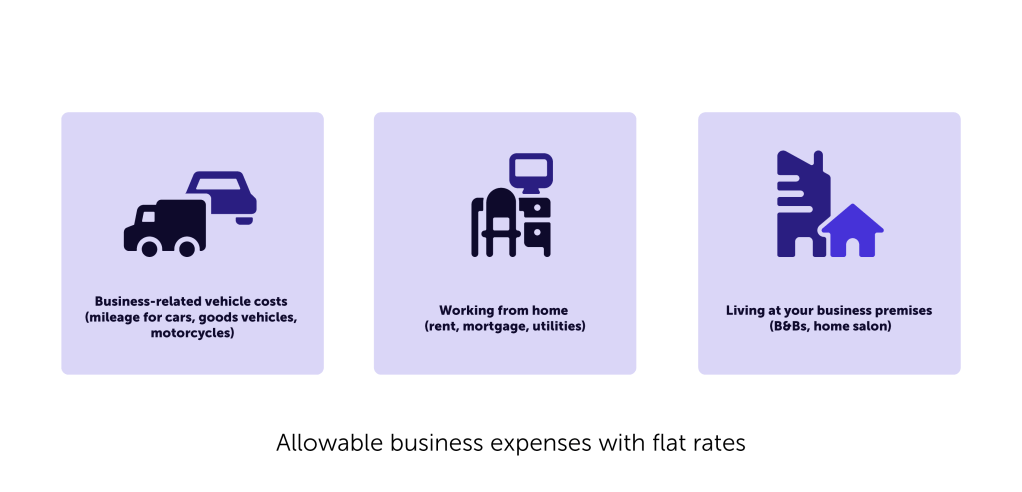
You can use simplified expenses if you operate as a sole trader or a business partnership – but you can’t use them if you run a limited company or a business partnership involving a limited company. You don’t have to use this method, so it’s worth checking if it makes sense for your business setup.
The self-employed allowable expenses list using flat rates includes:
- business-related vehicle costs
- working from home
- costs if you live in your business premises
Simplified expenses may be suitable for those who have straightforward tax affairs and relatively few business expenses. It can also be useful if you drive a lot for your business. You can check which expenses method is best for you on the government website.
For all other costs, other than those listed above, you’ll need to work out exactly how much you’ve spent.
Simplified expenses working from home
Running a business from home or freelancing from home can make calculating exact business expenses a challenge. This is because you’ll need to work out the proportion you use for business purposes – such as the hours you work and rooms you use. This is because HMRC only lets you claim expenses that are directly related to your business.
But with the simplified expenses scheme you can claim a flat rate allowance if you use your home as an office or workshop.
Using your home as an office
If you’ve made use of your home as an office for at least 25 hours a month, you can use this allowance for the following expenses:
- rent/mortgage
- utilities
- other similar costs
You can’t use it for internet or telephone expenses as you’ll need to work out the proportion used for business purposes.
The simplified expenses flat rate for business owners working from home is as follows:
| Hours of business usage | Flat rate each month 2026 |
| 25-50 | £10 |
| 51-100 | £18 |
| 101+ | £26 |
Small business example
For example, you run a candle making business from your home and worked 30 hours each month for 10 months – but you had a busier period in winter where you worked 55 hours for two months. Your simplified expenses for your rent/mortgage and utilities costs while you run your business from home would look like this:
- 10 months x £10 = £100
- 2 months x £18 = £36
- Total you can claim = £136
This means you can take £136 off your total income to reduce the amount you owe tax on.
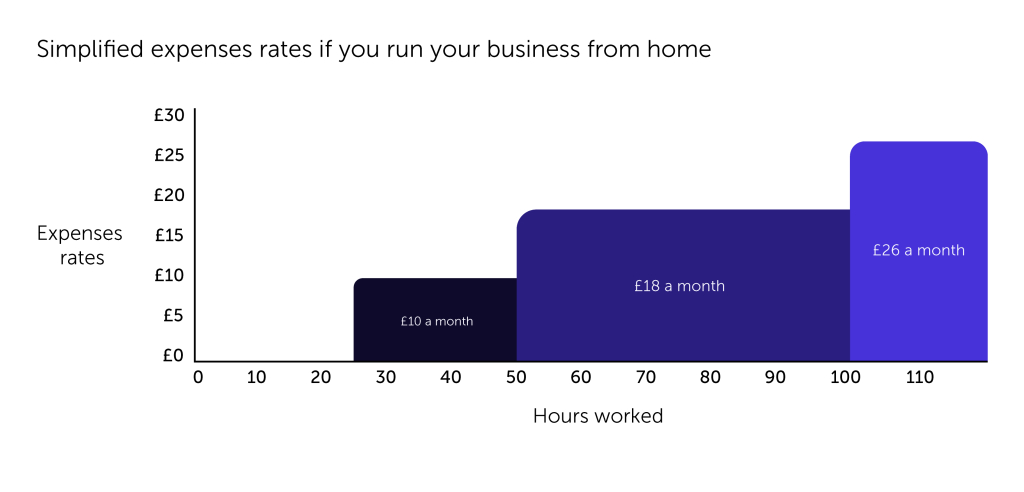
Image credit: Simply Business
Claiming simplified expenses for business vehicles
You can also calculate your vehicle expenses using a flat rate for mileage. This replaces the actual costs of buying and running your vehicle, such as insurance, repairs, and fuel.
You can use this for cars, vans, and motorcycles, but not for vehicles designed for commercial use like black cabs. It also applies if you lease a company car.
HMRC mileage rates can be used for:
- cars (except for those specifically designed for commercial use, such as a black cab or a driving instructors’ dual control car)
- goods vehicles (such as vans)
- motorcycles
The simplified expenses scheme can’t be used for vehicle expenses if you’ve already claimed capital allowances, or if you’ve already included them as part of your business profits.
The simplified expenses mileage rates are:
| Vehicle type | Flat rate each mile 2026 |
| Cars and goods vehicles on the first 10,000 miles | 45p |
| Cars and goods vehicles over 10,000 miles | 25p |
| Motorcycles | 24p |
This rate only applies to the use of these vehicles.
It’s important to note that once you start claiming simplified expenses for your vehicle, you must continue to do so for as long as it’s being used for business purposes.
You don’t have to use flat rates for all of your vehicles. If you have multiple vehicles used for work, you might choose to use flat rates for some, and work out exact costs for others.
As with everything related to your business taxes, it’s important that you seek advice from a qualified accountant before making a decision.
Living at your business premises
Certain businesses use their business premises as their home, such as a guesthouse or a bed and breakfast. Instead of working out the exact split between your private and business use, you can calculate the total expenses for the premises. You then subtract a flat rate for your personal use based on how many people live there.
The amount leftover is what you can claim as your business expenses. The monthly flat rates for personal use are:
- one person: £350 a month
- two people: £500 a month
- three or more people: £650 a month
How to claim your simplified expenses
To claim these flat rates, you’ll need to keep accurate records throughout the tax year. This includes tracking your business miles, the hours you work at home, and how many people live at your business premises. At the end of the tax year, you include these amounts in the total expenses section of your Self Assessment tax return.
This is especially helpful with the introduction of Making Tax Digital – which requires you to provide digital receipts of all your expenses.
It’s a good idea to use the government’s simplified expenses checker. This tool helps you compare what you can claim using flat rates against your actual costs, making sure you get the best tax savings for your business. Remember to keep all your receipts and records safe in case HMRC asks to see them.
Need some help with small business accounting?
- The 9 best self-employed accounting software – get MTD ready
- Small business tax changes: new thresholds, rates, and allowances
- Bookkeeping tips for small businesses
- HMRC late filing penalties
Is your business insured?
We have 800,000 UK policies plus a 9/10 satisfaction score. Why not take a look at our expert business insurance options – including public liability insurance and professional indemnity – and run a quick quote to get started?