


A business van is an important investment, so here we look at which option might best suit you.
Learn more about the differences between buying and leasing a van, and how to be the most tax efficient with your vehicle.
How to buy a van for your business – at a glance
- buying vs leasing – when you buy a van, you have to front the costs but you’re free to drive as much as you want. Leasing a van reduces the financial impact, but can limit how much you drive the van
- tax relief – buying a van for your business is typically tax deductible. And if your business is VAT registered, you can claim back 100 per cent of the VAT
- van license – you can only drive a van up to 3,500kg. Heavier vehicles require a specific license
- van security – the prevalence of tool theft means vans are often broken into. So anticipate extra costs to bolster your van’s security
Buying a van for business use
Buying a van means it’s yours, which brings a range of benefits. If you decide to buy instead of lease, you’ll either need to buy the business van outright or fund it through a loan, which is often known as ‘finance’.
Buying a van for your business gives you more freedom. You won’t be tied into a strict lease contract and you can make changes to its appearance.
For example, you’ll be able to put your business name and contact details on the van, or make changes to the inside to suit your needs.
You might also want to consider if you need to buy a fleet of vans, if you have a team of plumbers working for you for example.
Leasing a business van
Leasing a van through a limited company is different to buying, as you won’t own it outright. You’ll just be renting it – typically for a monthly fee.
If you lease a business van, you won’t need a big chunk of cash as the cost is spread out over the fixed term of a contract. You’ll just need to pay for a deposit and monthly repayments.
Maintenance costs tend to be covered by the leasing company so you won’t have to worry about that either. If you grow attached to the van there might be an option to buy it, as explained above. You’ll just need to commit to a ‘lease purchase’ style agreement.
If you’re looking for information on business car leasing then we have a separate guide for that.
Hire purchase
Another way to get hold of a business van is through hire purchase. This involves an initial deposit and you’ll hire the van for a set period of time. You then have the option to buy the van at the end of your contract.
Can I drive a van with a car licence?
Drivers with a standard car licence are allowed to drive a van weighing up to 3,500kg – including any passengers and cargo (that’s 3.5 tonnes). Anything larger, you’ll need a specific licence.
If you passed your test before 1 January 1997, you might be able to drive a heavier van (up to 7,500kg) and tow a trailer.
Check your driving licence record to see what vehicles you’re allowed to drive.
Using a personal van for business
Is it cheaper to use a personal van or buy through your business? Depending on what you do for work, you may decide to use a van you already own for business purposes.
But it’s important to know that this can affect how you pay tax to HMRC:
- if you’re a sole trader – you’ll need to work out business-related costs on your tax return or you can use simplified vehicle expenses using HMRC flat rates rather than exact costs of buying and running your van
- if you’re a limited company – personal journeys will be subject to benefit in kind tax (this means completing a P11D form for directors and any employees using a company van for personal use)
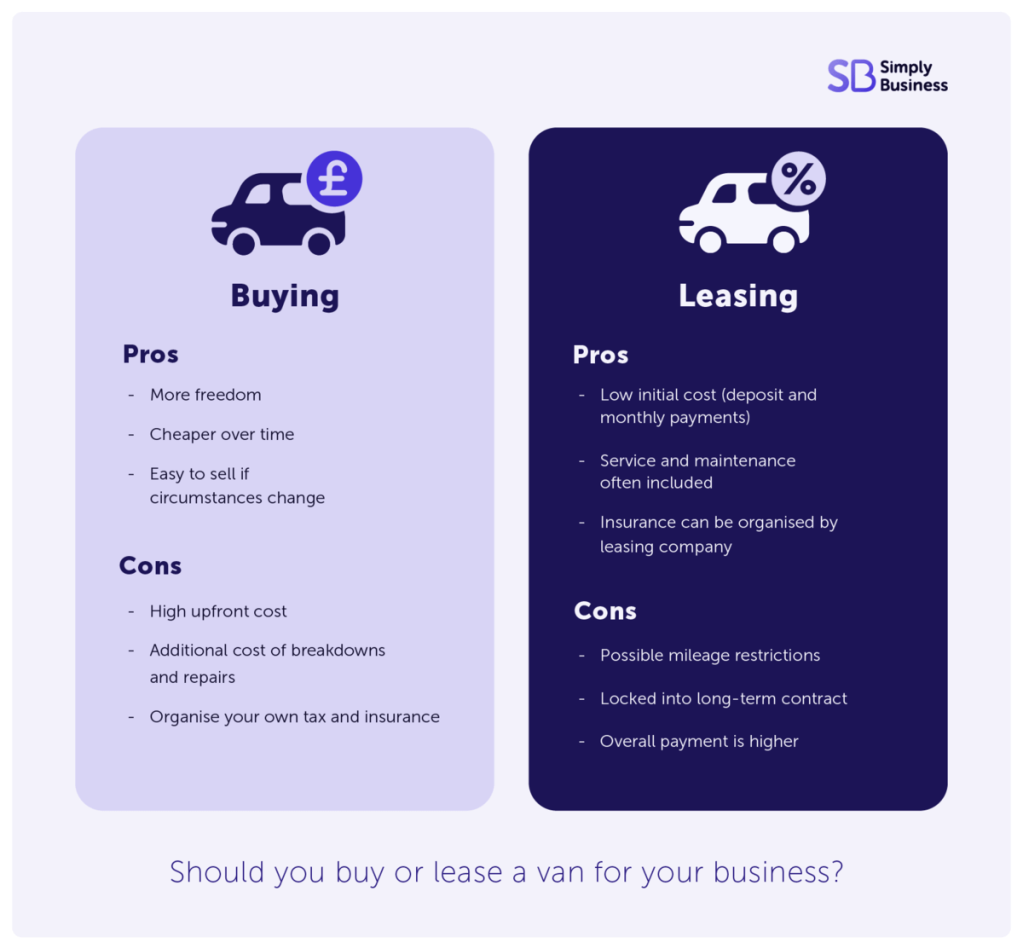
Buy or lease a van – pros and cons
Before committing to buying or leasing, it’s important to bear in mind the drawbacks. By buying you’ll be left solely responsible for:
- the van’s upkeep – including breakdowns, repairs, and general wear and tear
- the legal logistics – your road tax and insurance responsibilities
The costs of breakdowns and repairs can be high (particularly if you’re a startup), but if you can cope with this outlay then buying could make more sense. Van leasing certainly isn’t perfect for all, as you might face things like:
- mileage restrictions and hefty penalties if you go over them
- long-term contracts that may not fit with your changing circumstances
- an overall payment that ultimately outweighs the cost of buying outright
So, buying tends to bring a bit more freedom while a van lease could give you a little more security. Neither option is necessarily better than the other and you get tax relief with both.What fits best will depend on your business. Take a look at your balance sheet, weigh up the pros and cons, and pick your option carefully.
How to buy a van through a limited company
You may find some tax benefits through buying a van through your company.
- Check your van is eligible for you to reclaim VAT
- Buy the van in your company’s name and bank account
You can claim back VAT on the price you bought the van to reduce your corporation tax. You do this by making a capital allowance claim. This just means you need to charge VAT when it comes to selling your vehicle.
Tax is a complex subject so it’s always best to get advice from a professional advisor or accountant to help you make your decision.
Tax benefits and reliefs
Here we explain a bit more about different tax reliefs you could get when buying a business van.
Can I claim for a van on my tax return?
You can claim the cost of buying a van as expenses against your income tax bill, but how you do so depends on how you pay tax.
If you use traditional accounting you can claim the van as a capital allowance. Generally, the same applies if you use cash basis accounting, unless you’re using simplified expenses.
How much tax can I claim back on a new van?
There are several tax advantages of leasing a van for business. The main one is being able to claim up to 100 per cent VAT back on the monthly payments, if your business is VAT registered. This is provided that the van is only for business use.
And like buying a van for a small business, you can claim the cost of van rental as an expense when it comes to filing your tax return. Your rental payments can be a tax-deductible expense.If you want to know more about allowable van, car, and travel expenses, check out the UK government’s guide to travel expenses for the self employed.
Van benefit charge
The table below shows the standard value you’ll need to report to HMRC if employees use a van for private journeys.
Charge | 2025-26 |
|---|---|
Van benefit | £4,002 |
Van fuel benefit | £769 |
Note though, ‘personal use’ doesn’t extend to infrequent journeys like driving to a doctor’s appointment on the way home.
As an employer, it’s your responsibility to report benefits in kind at the end of the tax year – this is filed using your P11D form or through PAYE.
The government website has more information on how to report company car benefits if using payroll software.
Van security
Van security and keeping your business stock and tools safe from thieves is another important consideration for van drivers.
Unfortunately, tool theft is a common issue in the UK – but there are things you can do to keep your tools safe in your van. Having the right locks and choosing parking spaces carefully can all help reduce the chances of your van being targeted.
Summary – take the time to look at your finances
A van can help you run your business more efficiently – and even promote your business name – but it’s an important financial decision.
Be sure to take the time to research all your options before jumping into an expensive leasing deal. Check your budget and cash flow forecast so you’re sure you can cover the monthly running costs of a business van.
Overall, it’s a business decision that you might want to discuss with an accountant to understand any tax benefits and implications if you have employees.
Ready to set up your cover?
As one of the UK’s biggest business insurance providers, we specialise in public liability insurance and protect more trades than anybody else. Why not take a look now and build a quick, tailored quote?