
The latest updates
- pubs, clubs, and live music venues will get a 20% cut to business rates from April 2027
- Burnham held his first official talks with small business groups on 24 July, pitching a “new offer” to job creators
- VAT on domestic electricity will drop to 0% from 1 October, benefiting unregistered micro-businesses
- early priorities include tackling youth unemployment, regional investment, and an “Innovation Nation” agenda
- most details of costs and how policies will be funded are expected in the new Chancellor John Healy’s upcoming Autumn Budget on 28 October
Andy Burnham is now prime minister, after formally being invited to form a government by King Charles on 20 July. For small businesses, he’s indicated that he’ll focus on devolution, business rates reforms, and local investment funds.
Burnham has also made clear that one of his first priorities will be tackling the cost of living and the country’s social care crisis. He wants this moment to be a “circuit breaker” for Britain, with a new economic and political model.
But what will Andy Burnham mean for small businesses and the self-employed? We cover the latest updates and upcoming milestones to watch out for.
‘A pro-business leader’
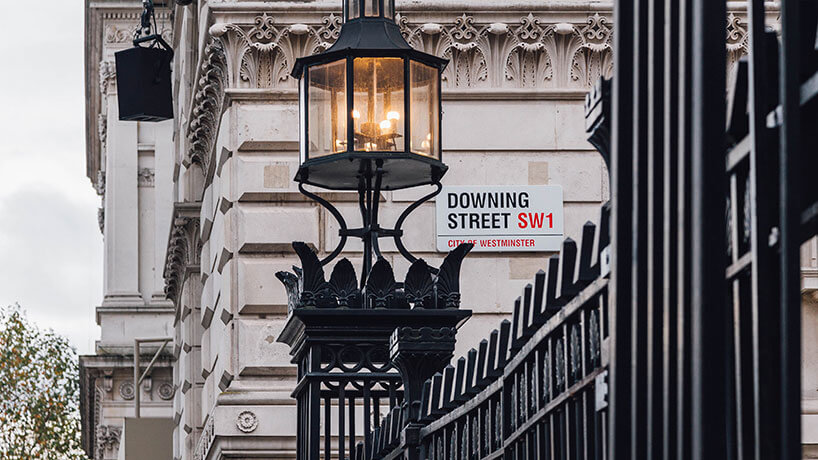
Burnham emphasised his support for businesses in his first Downing Street address after becoming prime minister. He said: “Make no mistake, everybody. I will be a pro-business leader of the Labour party as I was a pro-business mayor of Manchester.”
He backed up this pledge on 24 July by holding his first official talks with business representatives, including the Federation of Small Businesses (FSB), the CBI, the British Chambers of Commerce, as well as Small Business Britain. He pitched a “new offer” to job creators, promising clearer long-term direction, faster decision-making, and giving businesses a stronger voice in shaping policy.
In exchange, Burnham is calling on employers to partner with the government to help tackle the youth unemployment crisis. Acknowledging that many school leavers are unprepared for the workplace – which makes the skills shortage worse for small businesses. Burnham wants businesses to help restore the “first rung in the ladder” for young people entering the workforce.
The new prime minister has also spoken of regional growth and high street survival, including devolved power to improve high streets, business rates reforms, and improved access to public sector contracts for small businesses.
How do small businesses feel about a new prime minister?
Before Burnham was officially in office, Simply Business asked readers if they thought a new prime minister would be good for small businesses. The snap poll of 232 respondents revealed that 49% said “no”, whereas 29% said “too early to say” and 13% said yes”.
(This quick‑turn poll reflects our audience’s views at publication. It’s indicative rather than nationally representative.)
What could change for small businesses under Burnham?
Burnham has signaled what he wants to focus on first, and has rapidly assembled his cabinet to deliver it, but details of how his ideas will be funded have yet to be finalised.
These are key areas you need to pay attention to as a small business owner, based on early policy announcements, industry talks, and by-election pledges:
1. Regional investment and devolution
Burnham is a vocal champion of devolution – pushing power and money away from Westminster and towards local areas. He’s talked about ‘Manchesterism’ and wanting to rebalance power away from the London centre.
For small business owners outside London, this could mean more accessible local funding, better transport infrastructure, and stronger regional support networks.
2. Business rates review
Burnham confirmed a 20% cut to business rates for pubs, clubs, and music venues next April. The announcement is a more generous cut than the Treasury’s previous plan of 15%.
It’s unclear if this will form part of a wider business rates reform, but more details will likely come in the Autumn Budget, which will be delivered by newly appointed Chancellor of the Exchequer, John Healey. Burnham has also said he’d consider cutting employers’ National Insurance and lowering the threshold for paying business rates for small, independent hospitality, leisure, and retail businesses.
3. Energy VAT cuts
In a welcome move for many micro-businesses feeling the squeeze of utility costs, the government has announced a reduction in VAT on domestic electricity bills from 5% to 0%, effective 1 October 2026.
Crucially, it’s been clarified that small businesses not registered for VAT that qualify for domestic energy relief will also directly benefit from this cut.
4. “Good Growth Funds”
Burnham wants the government to help all regions establish “Good Growth Funds” (modeled after Greater Manchester) to consolidate public and private investment locally, making funding more accessible for local start-ups and scale-ups.
5. Innovation and industry
We could see more support for start-ups and creatives. Burnham specifically said he wants to back “scientists, technologists, entrepreneurs, and creatives” and turn the UK into an “Innovation Nation.”
To drive this home, Burnham has created a brand new, combined cabinet for Business, Innovation, Science and Trade. This directly supports his innovation agenda and signals a more joined-up government approach to supporting UK start-ups.
Key dates and what to track next
Andy Burnham was appointed the new British prime minister on 20 July 2026, triggering a by-election to find his replacement as Mayor of Greater Manchester on 30 July.
With his cabinet now in place and early talks with industry leaders already underway, the next major milestone for small businesses to track is the Autumn Budget, where the Chancellor of the Exchequer John Healy is expected to lay out the concrete financial details of Burnham’s ’10-year plan’ for the country.
Why this moment matters for small business owners
Political transitions create uncertainty – and uncertainty is expensive for small businesses. Tax policy, business rates, employment law, and VAT thresholds can all shift with a change in leadership.
Sign up to our newsletter to keep up to date on changing policies and how this could affect your small business. It’s also a good idea to review your financial plans and discuss with a professional if any policy changes could impact how you run your business.
Read more articles for small businesses
- Summer VAT cut – what small businesses need to do
- Quarterly tax reporting – practical ways to stay ahead of the new deadlines
- Mileage tax relief just jumped to 55p – what it means for the self-employed