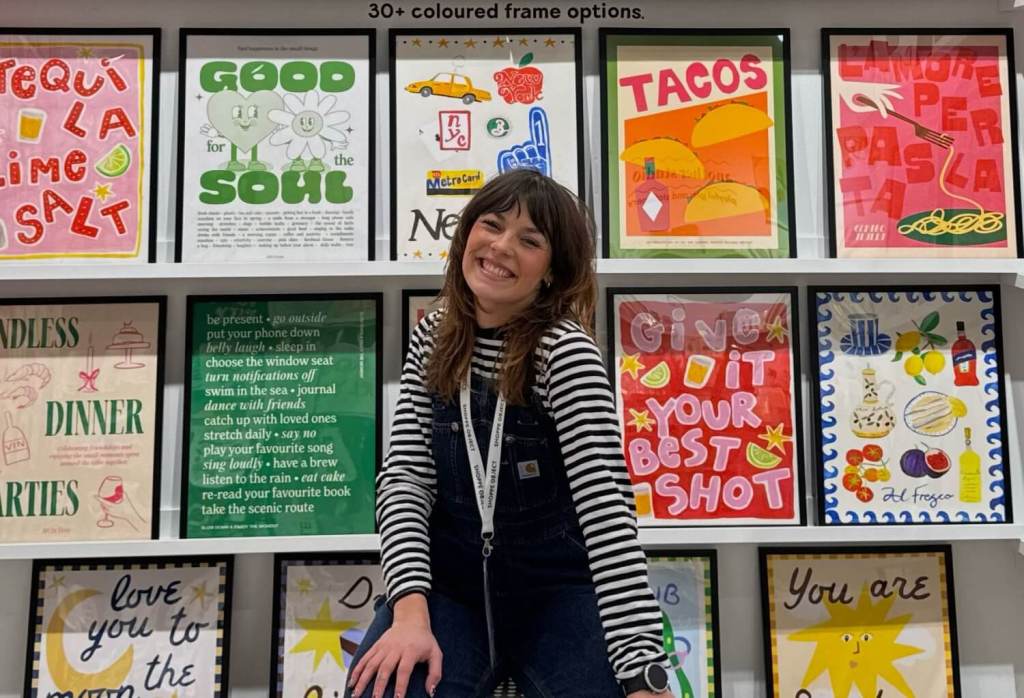

Abbie Franks, artist and owner of Proper Good, never planned to run her own business – but one conversation changed everything. Going from junior designer to the founder of her own design studio, she quickly learnt that turning creativity into a sustainable business takes more than talent alone.
I didn’t set out to start a business. I was working as a graphic designer in the fashion industry when I began selling prints on the side – a creative outlet alongside my day job. A year later, everything changed.
It was my nan who gave me the push I needed. “You work more than you live – if you never try, you’ll never know.” I quit my job the next day.
Here are the five lessons I’ve learned about running a business – plus find out how to win £500 to start or grow your small business.
Tip 1: Expect the first few months to feel hard
The first few months after quitting were difficult. I went from being a junior designer, with someone telling me what to do and when to do it, to suddenly making every decision for myself. There was no structure, no routine, and no clear sense of priority. Knowing what to work on – and when – felt overwhelming.
One of the biggest shifts came when I got my own studio. Having a physical place to go every day helped to build my routine and treat the business like a job – not just a hobby. Turning up to “work” each morning created structure when everything else felt uncertain.
Over time, routine came more naturally. Planning for two or three trade shows a year gave me built-in deadlines and something concrete to work towards. At the same time, I was learning that small business life can’t always be tightly scheduled – opportunities pop up unexpectedly, and staying agile matters just as much as planning ahead.
Practical takeaway: When you go from employment to self-employment, structure often disappears overnight. If you’re struggling to prioritise or find a rhythm, look for ways to recreate it – whether that’s working from a studio or setting fixed working hours.
Tip 2: Becoming a “business person” takes time
One of the hardest transitions for me wasn’t creative – it was mental.
It’s one thing to design something – but if you don’t know how to sell, you won’t make money.
Learning how to run a business meant making mistakes. One early example stands out to me: the first time I sent an order to a stockist outside the UK, it was returned because I didn’t know about the additional forms required for international shipping. It was frustrating – but it taught me more than any guide could.
Over time, I’ve had to learn about international trade, cash flow, tax returns, wholesale pricing, and how to work directly with shops around the world. More recently, I’ve also had to learn how to be a manager – going from working alone to leading a team, putting workflows in place, and supporting other people’s work.
None of it came naturally at first. But learning by doing was unavoidable – and essential.
Practical takeaway: You don’t need to understand everything at the start – many things are learnt through trial and error. Mistakes aren’t a sign you’re failing, they’re often the fastest way to understand how your business actually works.
Tip 3: Let your business model evolve
When I first started selling prints, I assumed that I’d mainly be selling to a few customers on Etsy. Wholesale wasn’t part of the plan.
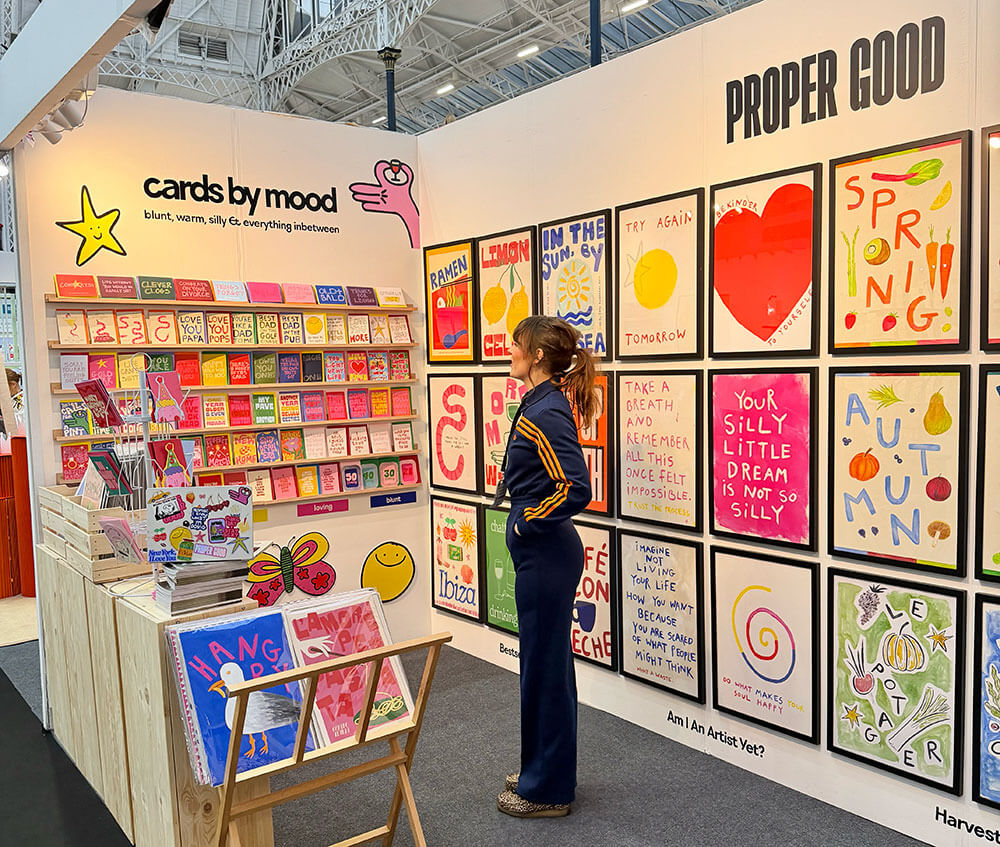
A major turning point for my business model came in January 2023, when I did my first trade show. I’d visited the same trade show three times previously as a customer and even planned to exhibit the year before – but it had been too expensive at the time.
When I finally took the leap and attended as a trader, my stand felt so small – which is why I was so shocked when stockists like Oliver Bonas and Anthropologie showed interest in my work.
Even though my stand was small, what made the difference was preparation. By the time I exhibited, I’d built a strong and clear range – something stockists need to see
Now, selling to customers directly accounts for less than a third of my income. Wholesale became the foundation of the business – and that’s something I never expected at the start.
Practical takeaway: It’s okay if your business doesn’t end up looking like you first imagined. Pay attention to where demand comes from and allow your business model to evolve with it.
Tip 4: You don’t need a lot of money to begin
My business was self-funded from the start. I began with a £200 Canon Pixma IP8750 printer, which I paid for by doing a freelance job.
Keeping costs under control was essential – especially early on. Some of the things I started with included:
- Etsy, instead of paying for a website
- branding I designed myself
- basic packaging like do-not-bend envelopes and cello bags
- branded stickers and postcards
- A4 and A3 paper
All in, I managed to keep my initial setup under £500. Already having creative skills meant I could do a lot myself – and that made a real difference.
Practical takeaway: You don’t need a big budget to get started. Look at what you can do yourself – whether that’s branding, websites, photography, or marketing – and build from there. Keeping early costs low can give you the breathing room you need to grow at your own pace.
Tip 5: Use quiet periods to strengthen your business
Quiet periods can be unsettling – especially when your income dips. It’s easy to panic when things slow down…but I’ve learned to reframe that time instead of fearing it.
Slower moments are now used to strengthen my business: designing new artwork, sourcing inspiration offline in museums, galleries, shops, or while travelling, planning social media content, working on passion projects, or learning new skills through courses and classes.
The work doesn’t stop – it just changes shape.
Practical takeaway: Slower periods can feel uncomfortable, but they’re often an opportunity in disguise. Progress doesn’t always look like sales – sometimes it’s preparation.
So, what’s next?
I never expected my business to look like this. I didn’t expect wholesale to become my main income stream or to be selling to stockists around the world.
But by learning as I went, I’ve built something sustainable. And while the transition from creative to business owner wasn’t easy, it’s been essential.
Starting and running a small business means constantly learning – and you don’t have to do it alone. Simply Business is offering one small business owner the chance to win £500 for your business – because the right support can help turn uncertainty into momentum.
Don’t forget your insurance
Whether you’re still in the planning stage or have already started, don’t forget to find cover for your business. As one of the UK’s biggest business insurance providers, we protect more trades than anybody else. Why not take a look now and build a quick, tailored quote?