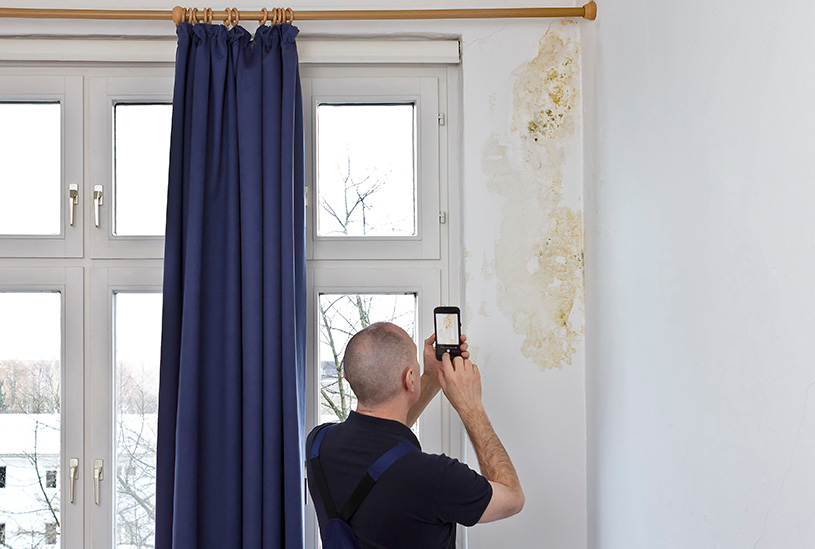


A new law will introduce time limits for private landlords to respond to potential hazards in rental properties. Awaab’s Law will be introduced for social landlords from October 2025 and will be extended to the private rental sector as part of the Renters’ Rights Bill.
What is Awaab’s Law?
Awaab’s Law will require landlords to fix and investigate dangerous damp and mould in a set time period. They’ll also be required to repair all emergency hazards within 24 hours.
The new law is named after Awaab Ishak, who tragically died aged two after being exposed to damp and mould in social housing for a prolonged period.
The law was introduced as part of the Social Housing (Regulation) Act following a campaign by Awaab Ishak’s parents, housing charity Shelter, and The Manchester Evening News.
Awaab’s Law summary – what do landlords need to do?
Awaab’s law is being introduced in the social housing sector in three stages between 2025 and 2027, before being rolled out to the private rented sector as part of the Renters’ Rights Bill.
Here’s what landlords will need to do:
- stage one (October 27, 2025) – address damp and mould hazards within a fixed timescale, and address all emergency repairs as soon as possible and within no longer than 24 hours
- stage two (2026) – address a wider range of hazards (yet to be confirmed) within fixed timescales. This is likely to include excess cold and heat, hygiene hazards, structural collapse, and electrical hazards
- stage three (2027) – address all hazards defined by the Housing Health and Safety Rating System (HHSRS) within fixed timescales
While full details of how Awaab’s Law will operate for private landlords are still being finalised, the government has officially launched a consultation on how to implement it for private renters, which will close on December 18.
Housing Minister Matthew Pennycook outlined the government’s stance, stating: “Irrespective of tenure, all renters have the right to live in a safe and decent home and have complaints responded to in a timely manner. Awaab’s Law is already helping to drive up standards in the social housing sector. We’re now moving to extend it to private landlords so that England’s 11 million private renters can enjoy the same protections.”
Who does Awaab’s Law apply to?
Awaab’s Law will initially apply to social landlords, and later apply to private landlords. The law will only apply to landlords in England.
When does Awaab’s Law start?
The first stage of Awaab’s Law officially came into force for social landlords on October 27, 2025.
From 2026, it will be extended to cover a wider range of hazards beyond damp and mould (yet to be confirmed) in the social housing sector. From 2027, it will be extended further to apply to all hazards in social housing defined by the HHSRS (except overcrowding).
There’s currently no exact date for when Awaab’s Law will apply to private rental properties. It will be introduced as part of the Renters’ Rights Bill. The outcomes of the government’s consultation closing in December will help inform the timeline for these new protections to come into force. However, the introduction of Awaab’s Law for private landlords is largely expected to mirror the timeline and processes used for the social housing sector.
What happens if landlords don’t comply with Awaab’s Law?
The government estimates that around one in 10 private rented homes currently have a hazard at the most serious level (category 1). The Renters’ Rights Act recently introduced fines of up to £7,000 if these serious dangers are found, and Awaab’s law will go further by legally forcing quick action to resolve them.
The Renters’ Rights Bill proposes that if a landlord fails to comply with Awaab’s Law, tenants will be able to challenge them through the county courts for breach of contract.
The court will be able to order the landlord to take appropriate action (such as immediate repairs) or pay compensation to the tenant.
Tenants will also be able to escalate complaints made to their landlord to the Private Rented Sector Landlord Ombudsman (also part of the Renters’ Rights Bill).
How can private landlords prepare for Awaab’s Law?
Ahead of the new law being introduced, landlords can prepare by:
- completing regular inspections – to identify potential hazards and fix them as quickly as possible
- communicating regularly with tenants – to find out about potential hazards before they escalate into serious problems
- documenting all repairs – to have a clear record of the last time repairs were made or inspections were completed
More guides for landlords
- Smart meter warning: 300,000 properties at risk
- New energy efficiency rules for rental properties
- 5 buy-to-let tax changes for landlords in 2025
- Ban on new leasehold flats – how will this affect landlords?
Get set with tailored landlord cover
Over 200,000 UK landlord policies, a 9/10 customer rating and claims handled by an award-winning team. Looking to switch or start a new policy? Run a quick landlord insurance quote today.