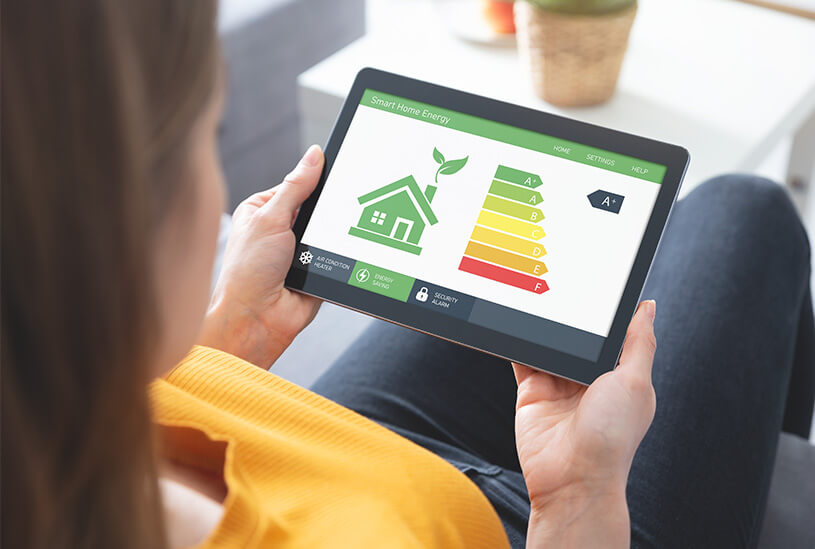

Landlords will need to make sure rental properties have a minimum Energy Performance Certificate (EPC) rating of C by October 2030.
And later this year, the way home energy performance is measured and scored is being updated. The proposed new requirements are part of the government’s Warm Homes Plan.
What do you need to know about plans for new energy efficiency rules, and how could they affect the buy-to-let market?
- What are the proposed changes to EPC rules?
- Plans for an updated EPC system from 2026
- Will rental properties meet the new EPC deadline?
- Landlords reveal cost of increasing EPC rating
- Could increased EPC ratings lead to higher tenant demand?
- Proposed EPC changes – what happens next?
- Energy performance ratings in the rest of the UK
- Changes to EPC rules for landlords FAQs
Changes to energy efficiency rules – at a glance
A change to the Minimum Energy Efficiency Standards (MEES) will require rental properties in England and Wales to have a minimum EPC rating of C (rising from E). This will apply to all tenancies from 1 October 2030.
The government has also confirmed that the EPC system will be overhauled in 2026, introducing new ways of measuring performance.
It will be based on how properties retain heat rather than how much energy a property uses.
The new system will become compulsory for EPCs on 1 October 2029.
What does this mean for landlords?
Rental properties that have an EPC C rating before 1 October 2029 will be compliant with MEES until the EPC expires (they usually last for 10 years).
Any rental property that doesn’t have an EPC C after 1 October 2029 will be measured against the new system, in which it is likely to be harder to get a C rating (or equivalent).
Read more: Minimum Energy Efficiency Standards guide for landlords
New EPC rules for landlords – government confirms details
The government recently published its Warm Homes Plan, which included details about its proposals to increase the minimum EPC rating for rental properties.
It confirmed the following information:
- all rental properties in England and Wales will need an EPC rating of C from 1 October 2030
- there will no longer be separate deadlines for new and existing tenancies
- the cost cap (the max amount landlords are expected to spend on improvements) will be £10,000 (lowered from a proposed £15,000)
- the cost cap will be lowered further if £10,000 represents 10 per cent or more of a property’s value
Updated EPC system from 2026 – what landlords need to know
The current EPC system is based on estimated running costs and how much energy a property uses.
It’s been suggested that this penalises properties that are heated using electricity (such as a heat pump) as electricity is more expensive than gas.
The new system, known as Home Energy Model (HEM), will measure properties on three criteria:
- Fabric performance – how well the property retains heat through insulation, draught-proofing, and windows
- Heating systems – how efficient the heating system is, with a priority for efficient systems like heat pumps
- Smart readiness – whether the property can generate its own energy (e.g. through solar panels)
When getting an EPC through HEM, properties will be scored first on their fabric performance and then on either their heating system or smart readiness.
This could mean most landlords will need to install a heat pump (heating system) or solar panels (smart readiness) to get an EPC with an equivalent rating of C or higher under the new system.
The new system is designed to provide more accurate long-term performance data for properties. The government launched a consultation in January 2026 to determine how new metrics will be calculated and whether the A-E rating system will be retained.
Although HEM is due to be introduced from 2026, the government says it won’t become compulsory for EPCs until 1 October 2029.
Read more: RTS meter warning – thousands of properties still need to upgrade
Will all rental properties meet the 2030 EPC deadline?
At the current rate that landlords are making energy efficiency improvements, it would take until 2042 for all rental homes to meet the new standards, according to research by Hamptons.
To meet the 2030 target, it’s estimated that each year around 340,000 rental homes will need to make improvements to achieve a minimum EPC rating of C. And that’s not taking the new rating system into account.
Estate agency Hamptons’ analysis of Ministry of Housing, Communities and Local Government data shows that between January and August 2024, 39 per cent of rental homes with new EPCs moved into a higher band.
More than one in 10 (13 per cent) dropped into a lower band, while 48 per cent saw no change.
Over half (55 per cent) of rental properties with a new EPC during this period had a rating of C or higher.
It’s estimated that up to four per cent of rental properties won’t achieve a minimum EPC rating of C.
Significant cost to increase EPC rating for many landlords
A Simply Business study of over 1,000 landlords in 2025 found that over half (55 per cent) expect they’ll need to make improvements to their property to meet a minimum EPC standard of C by 2030 (up from 50 per cent in 2024).
More than one in 10 (13 per cent) anticipated energy efficiency improvements could cost them over £10,000. Meanwhile, almost two in five (38 per cent) expect improvements to cost between £1,000 and £10,000.
With a spending cap of £10,000, some landlords may spend the maximum on improvements without reaching the desired minimum EPC rating.
How to improve your EPC rating – landlords reveal plans
Landlords have revealed which improvements they would need to make to increase their rental property’s EPC rating to C or above:
- increase loft insulation – 23%
- improve windows – e.g. install double or triple glazing – 20%
- increase draft proofing – 15%
- installing solar panels – 12%
- installing a heat pump – 11%
Over a fifth (21 per cent) said they weren’t sure what improvements to make.
Do you need to inform your insurer when making EPC improvements?
If you’re making significant energy efficiency improvements to your property, such as installing solar panels or a heat pump, you may need to notify your insurer.
This is because you could be making major structural changes to the property. Failure to notify your insurer could result in a future claim not being paid out.
Higher EPCs could lead to increased tenant demand
Rental homes that are more energy efficient could reduce utility bills for tenants.
Hamptons’ research shows that a tenant living in an average property with an EPC C rating would pay £499 less a year in utility bills, compared to a tenant living in an average property with an EPC D rating.
The difference is even bigger between typical properties with EPC C and EPC E ratings, with an estimated annual saving of £1,248.
| EPC rating | Average size (sq m) | Average annual running cost 2024 |
| A | 78 | £1,046 |
| B | 66 | £711 |
| C | 68 | £983 |
| D | 75 | £1,482 |
| E | 80 | £2,231 |
| F | 87 | £3,242 |
| G | 90 | £5,462 |
With the rising cost of living remaining a concern for many tenants, demand for properties with higher EPC ratings could increase.
This means that while energy efficiency improvements may be costly for landlords, in the long term the cost could be offset by higher average rents and shorter void periods.
Changes to energy efficiency rules – what happens next?
The government launched a consultation in January 2026 on how the new HEM system will be measured. This is due to close on 18 March 2026, with details expected before the end of 2026.
The deadline and details for minimum energy efficiency standards have been set as part of the Warm Homes Plan. Regulations are yet to be published, so there’s a chance details could be tweaked before the 2030 start date.
Here are some key points for landlords to consider:
- if landlords don’t have an EPC C rating by 1 October 2029, it could be harder to achieve the higher rating under the new system
- any property that has an EPC C rating under the current system before October 2029 will be compliant with MEES until the EPC expires (usually after 10 years)
- after that, the landlord will need to get a new EPC (equivalent to a C) under HEM, which could be more difficult
What about energy performance ratings in the rest of the UK?
The UK government sets EPC ratings in England and Wales, so the changes mentioned relate to properties in these countries.
However, the Scottish government ran a separate consultation on the same issue in 2021. There are also a different set of energy efficiency regulations in Northern Ireland.
Changes to EPC rules for landlords FAQs
What are the current EPC requirements for landlords?
All rental properties in England and Wales must have an EPC rating of E or above (unless they’re exempt). If your rental property has an EPC rating of F or G, it’s illegal to rent it out and you could be fined.
What are the proposed EPC changes for 2030?
From 1 October 2030, the minimum EPC rating for rental properties in England and Wales will increase from E to C. This will apply to all tenancies.
Should landlords improve their property’s EPC rating?
If your rental property has an EPC rating below C, it’s important that you make improvements to bring it up to standard. Popular energy efficiency improvements include insulation, upgrading windows, or installing a heat pump.
More guides for buy-to-let landlords
- What is buy-to-let investment? A guide to buying and selling property
- Landlord responsibilities – a guide to property maintenance and repair
- A landlord’s guide to to renting with pets
- Rental property noise complaints: a guide for landlords