


Quick answer: Small businesses in the UK can access funding through four main routes: debt funding (loans you repay with interest), equity funding (investment in exchange for a share of your business), grants (free money, but highly competitive), and reinvestment (using your own profits).
The right choice depends on how much you need, how fast you need it, and whether you’re willing to give up some control of your business.
Getting funding can be a huge opportunity for your business. But it’s not always obvious where to start.
The trouble is, there’s no one-size-fits-all answer to funding. A bank loan might suit one business perfectly and leave another drowning in interest payments.
This guide breaks down the main types of small business funding, what they’re best suited for, and how to actually apply for each one. Plus Felix Jackson, Programme Manager at Hatch Enterprise, a UK charity that helps early-stage businesses access funding, shares his expert tips.
What are the main types of business funding?
There are four broad categories of funding available to UK small businesses. Some you’ll need to pay back, some you won’t, and some mean giving away a slice of your business.
| Type of funding | Benefits | Things to consider |
| Business loan | Short-term finance | Interest costs and time to pay back |
| Angel investment | Investment and contacts | Giving away a stake in your business |
| VC funding | Investment and contacts | Giving away a stake in your business |
| Crowdfunding | Investor diversity and exposure | Takes a lot of effort |
| Grants | No repayment needed | Limited and highly competitive |
| Government schemes | Investor tax relief | Limits on how much you can raise |
| Reinvestment | No debt, full ownership kept | Risk of overspending |
Let’s go through each one in more detail.
How does debt funding, like a business loan, work?
Debt funding simply means borrowing money that you pay back with interest – usually regardless of how your business performs that month.
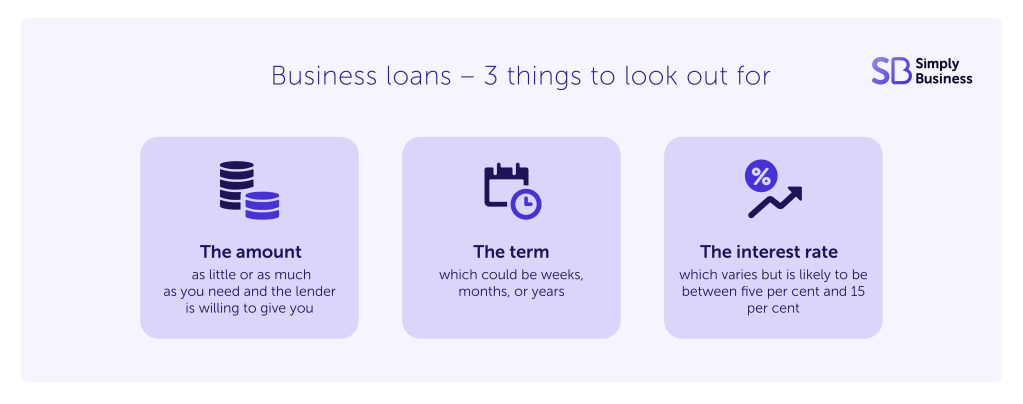
When you apply for a business loan, the lender will offer you:
- an amount
- a term (which could run from weeks to years)
- an interest rate (typically between 5% and 15%)
You may also need to pay a fee, and most lenders have set criteria around things like how long your business has been trading.
Before you apply, think about whether you want a fixed or variable interest rate, whether you need short or long-term finance, and whether you want a secured loan (backed by an asset) or an unsecured one.
Think this funding option is for you? Read our guide to the best business loans for small businesses.
3 steps to getting a business loan
- Prepare: check your credit score, get your finances in order, and work out how much you can realistically pay back, and over how long.
- Apply: most lenders let you do this online. You’ll need to fill in a detailed form and provide documents, and some may ask for a business plan too.
- Wait for a decision: if you’re accepted, you’ll usually get the money within days. Read the loan agreement carefully before you sign.
Expert tip: How to apply for a loan
Felix Jackson, Programme Manager at Hatch Enterprise, reveals these two top tips for securing a business loan.
1. Understanding cash flow
Lenders need to know you can make repayments on time, even in quieter months.
You need to convey a clear picture of how money comes in and goes out of your business over a fixed period, such as month by month for the next year.
A cash flow forecast is the best way to show this.
2. Show the return on investment
Explain exactly how the money you borrow will bring back more than it costs.
For example, if a loan is paying for new equipment, you need to show how much extra work that equipment lets you take on and when that income will arrive.
If you can’t answer both of these points with confidence, debt funding probably isn’t the right fit for you yet.

How does equity funding work – and is it right for you?
Equity funding means an investor (or group of investors) gives you money in exchange for a stake in your business. For example, a group of investors might offer you £100,000 towards new equipment in exchange for a 20% share.
There are a few main routes:
- angel investment: individual investors, known as business angels, who typically invest up to £500,000 in startups in exchange for equity
- venture capital (VC): funds made up of investors and business experts, usually targeting more established businesses with larger sums of money
- crowdfunding: a large number of people each contribute smaller amounts through an online platform, either for equity, a fixed interest rate, or rewards
- bootstrapping: self-funding your business by reinvesting what you make, without any outside investment
Simon Squibb, an entrepreneur and serial investor who’s invested in 82 startups, shares six ways to grow your business.
Expert tip: how to apply for equity funding
Before you even think about pitching, Felix says you need to answer two questions honestly: is your business structure set up to take investment, and are you comfortable giving up some ownership and control?
If the answer to both is yes, these are the fundamentals any investor will want:
1. A compelling growth story
When you raise equity, you’re selling your future, not your present. Investors want to know what’s exciting about where your business is headed. They need to believe in it as much as you do.
To convey this, you need a story, backed by financial projections and market analysis – and that shows ambitious yet realistic growth based on evidence you already have.
2. Confidence in you to lead
Investors back you as a founder more than your business.
You need to convince investors you’re trustworthy, that you’ll work through challenges, and that you have the expertise and passion to deliver the growth.
An evidence-based story, delivered with confidence, is your starting point for most of the follow-up questions investors will throw at you.
Read Hatch’s guide on social investment for more information.
Can you get a business grant – and how competitive are they?
Business grants are attractive because you don’t give up a stake in your business, and you don’t pay the money back. But that also makes them highly competitive. Some grants receive thousands of applications for a single award.
Grants can be awarded based on things like your location, industry, turnover, how long you’ve been trading, or your commitment to sustainability. For example, Simply Business has given away over £150,000 in business grants since 2020 – each targeted at different kinds of business owners.
- the Second Act Entrepreneur Fund offered £10,000 grants for business owners aged 50+
- the Young Entrepreneur Fund gave away £5,000 grants to business owners aged between 18 and 30
- Business Boost offered grants of up to £25,000 to businesses that championed innovation and social impact
Sign up to hear about our future grants here.
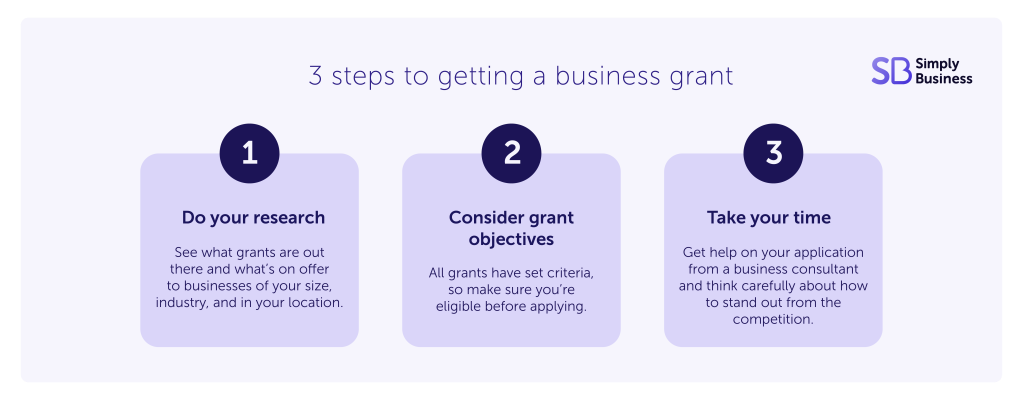
Finding grants you’re eligible for can be difficult, so here are some good places to start:
- small business grants in Northern Ireland
- Welsh business grants
- small business grants in Scotland
- business grants for women
- The King’s Trust: support for young entrepreneurs
Expert tip: How to apply for business grants
Felix says that because grants and prizes don’t need to be paid back, it makes them highly competitive. So to stand out, you need to become a master storyteller.
1. You’re selling a transformation
Grant funders fund change, so your application should follow a clear pattern:
- identifying an urgent problem
- your detailed understanding of that problem
- how you’re delivering the solution
- the specific difference this funding will make to address the problem
2. Show how the money creates momentum
You should also be clear about how you plan to spend the money and what each part achieves. The strongest applications show how a grant will start or build momentum for real impact, not just plug a short-term gap.
What government schemes can help fund my business?
The UK government runs several schemes designed to help small businesses raise money:
- Seed Enterprise Investment Scheme (SEIS): Venture capital funding where investors buy shares in your company and get tax relief. You’ll need to be a limited company, and you can raise a maximum of £150,000.
- Enterprise Investment Scheme (EIS): Similar to SEIS but focused on growth, with the opportunity to raise up to £12 million. You’ll need to be a limited company doing a qualifying trade.
- Venture Capital Trust (VCT): Offers tax relief to investors who invest indirectly in small, high-risk companies (usually startups) through trusts.
- Young Entrepreneurs Allowance: a new government support system designed to help cover living costs for young founders during their first year of starting a business
Is reinvesting your profits a smarter option?
Reinvestment means putting the profit you make straight back into your business. You keep full ownership, and you won’t take on any debt or interest.
It gives you more control over your finances and your direction, but it can slow down how fast you grow. To do it safely, keep a close eye on your profit margin so you don’t overspend.
Example scenario
You made £300 profit selling at a craft fair. You decide to reinvest 15% back into the business so you can generate more stock and sell more next time.
Expert tip: knowing what funding you need
Once you’ve decided investment is the right route, you need to get your business in front of the right people. Deciding which type of funding to apply for can be difficult, but Felix recommends looking at what each type of funder is looking for. Different funders ask different questions:
- Lenders ask whether you can repay them.
- Investors ask whether your business will grow, and whether they can trust you to deliver it.
- Grant funders ask what difference their money will make and how.
Before applying for funding, ask yourself which of these questions you can answer confidently.
3 ways to support your funding application
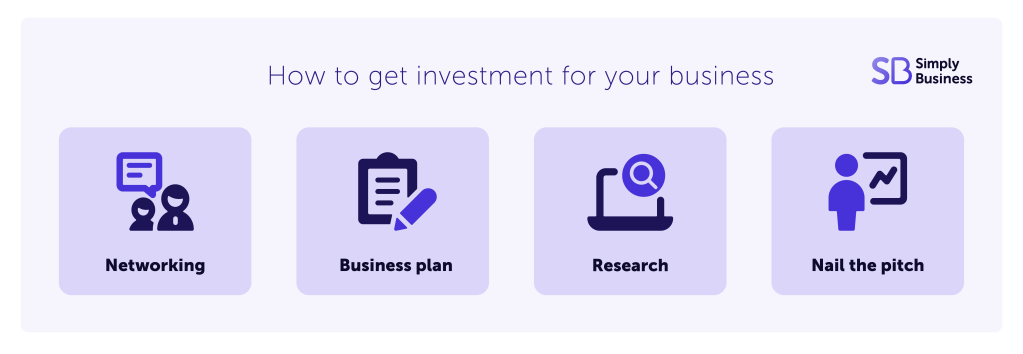
1. Create a business plan
When you start speaking to lenders or investors, you need a clear vision of where your business is going and exactly what you’d do with the funding. You’ll likely need a specific business plan to support your application.
Investors and banks use your business plan to check the funding they provide will actually help you, and offer a return on their investment. When writing yours:
- be realistic about your business’s limitations, but stay optimistic
- show you’ve thought about potential obstacles
- if you need funding to solve a specific problem, explain exactly how you’ll fix it
If you’re successful, remember you’ll likely have new stakeholders to keep updated on how your business is performing.
Need some inspiration? Read one coffee shop owner’s unique take on a business plan or see Felix’s advice on creating a lean business canvas.
2. Do your research
You might know your trade inside out, but investors and grant panels want to see you understand the wider business world too. This means showing you’ve done solid market research, such as spotting upcoming trends or gaps in the market, and that you know what your competitors are doing.
3. Nail your pitch
Whether you’re meeting investors, entering a competition, or applying for a loan, a strong pitch matters. It comes down to being prepared, confident, and understanding your audience, not your customers, but the specific people you’re pitching to.
A clear mission and vision statement can help simplify your messaging and show why you do what you do, along with the goals you want to achieve with the funding.
Wondering where to start? Here are 5 Dragons’ Den pitches we’ll never forget.
Frequently asked questions
How much does it cost to borrow money for a small business?
Business loan interest rates typically range from 5% to 15%, depending on the lender and your business’s circumstances. You may also need to pay an arrangement fee. Always check the total repayable amount before you sign, not just the interest rate.
How long does it take to get small business funding?
It depends on the type. A business loan can arrive within days of approval. Invoice finance is even faster. Equity investment and grants usually take much longer, often weeks or months, because of the due diligence and application process involved.
What are the alternatives to a bank loan?
Alternatives to a bank loan include invoice finance, peer-to-peer lending, crowdfunding, angel investment, venture capital, business grants, government schemes, and reinvesting your own profits.
What are the risks of business funding?
Every type of funding comes with risks, so it’s worth understanding them fully before you commit.
Business loans can carry high interest rates and long repayment terms. If you take out an unsecured loan, your personal assets, such as your home or car, could be at risk if you run into financial difficulty. Struggling to repay a loan can also damage your business credit score.
With investment, the main risk is giving away ownership and control. Investors might have demands you don’t agree with, and you could feel pressured into decisions that aren’t right for your business. If your business underperforms, you’re accountable to investors, and you could face financial difficulty if they decide to cash out early.
This guide is intended to help you understand your options. Business finance can get complicated, so speak to a professional before making any big decisions.
Ready to set up your cover?
As one of the UK’s biggest business insurance providers, we specialise in public liability insurance and protect more trades than anybody else. Why not take a look now and build a quick, tailored quote?