


How small business owners pay income tax is set to change. From 2026, there’ll be a phased switch to Making Tax Digital (MTD) – which will replace the annual Self Assessment process with quarterly tax updates.
According to our recent survey, almost half (46%) of small business owners are still unsure about how the upcoming Making Tax Digital rules will affect them. And a quarter said that fear of making mistakes was their biggest concern about it. We’re here to simplify the complicated bits.
Find out how to prepare for the Making Tax Digital changes, check if your business is affected, and see the key dates you need to know.
And if you’re a landlord looking to learn about Making Tax Digital, we have a whole other guide for you.
What is Making Tax Digital?
Making Tax Digital, or MTD, is a government initiative which will require small business owners and the self-employed to complete digital tax records and returns.
The government says that MTD aims “to help businesses get their tax right first time by reducing errors, making it easier for them to manage their tax affairs by going digital, and consequently helping them to grow.”
Making Tax Digital is being introduced in phases – with the changes to Self Assessment and income tax set to come into place in 2026. MTD is already in place for VAT-registered businesses.
MTD for income tax
Making Tax Digital for Income Tax Self Assessment (MTD for ITSA) means that business owners will need to keep digital records of their finances and complete quarterly tax updates.
MTD will apply to your business from the following dates:
- April 2026: for those with an annual income of over £50,000
- April 2027: for those with an annual income over £30,000
Note: The government is currently reviewing the needs of smaller businesses earning less than £30,000, and a timeline for this group has not yet been confirmed.
These dates will be based on your reported income from your 2024/25 tax return, which was due by 31 January 2026.
From these dates, you’ll need to submit your quarterly tax updates using a Making Tax Digital-compatible software. We’ve reviewed the best Making Tax Digital accounting software here.
If you’re in a business partnership, MTD will also affect your business, though this date has yet to be confirmed.
Read more: Business tax – a guide for small businesses
Getting MTD-ready in 4 steps
Preparing for the changes is simpler than you think. Just follow these four steps:
- Check your income: Look at your 2024/25 tax return to see if you cross the £30,000 or £50,000 threshold.
- Choose your software: Find an MTD-compatible accounting tool.
- Set up digital records: Start logging your income and expenses digitally.
- Register with HMRC: Sign up for MTD ahead of your deadline.
Choosing MTD-compatible software
To submit your quarterly updates, you’ll need to use software that’s recognised by HMRC. You can no longer use standard spreadsheets unless they are linked to HMRC-compatible “bridging software”.
There are plenty of flexible, low-cost options designed specifically for sole traders, including Sage, Xero, QuickBooks, and GoSimpleTax.
Read more: Check out our guide to the best small business accounting software in the UK to find the right tool for your needs.
Download your free MTD readiness guide
Want to keep this information handy? Download our free MTD for Income Tax PDF. It includes all the key dates and steps you need to take to get your business ready for 2026.
MTD deadlines
Once you’ve found an MTD-compliant accounting software, you’ll need to remember to report your income for the following dates.
Quarterly MTD deadlines
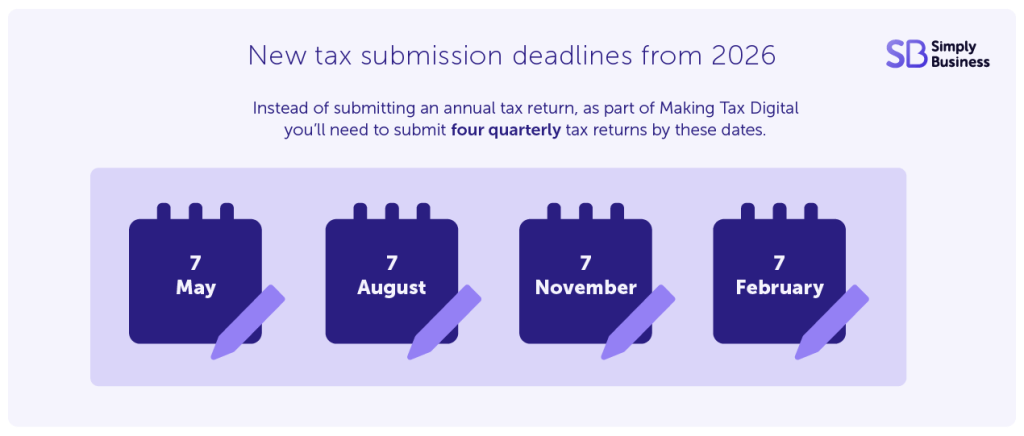
Instead of submitting an annual tax return, you’ll need to submit four quarterly tax updates by these dates:
- 7 May
- 7 August
- 7 November
- 7 February
You can submit these returns up to 10 days early if you know the quarterly information won’t change.
MTD deadline for final declaration
You’ll then need to submit a final declaration, or year-end tax return, by 31 January each year. This final declaration will confirm that the quarterly updates were accurate. You’ll also use this stage to make declarations about any other sources of income or claims.
Much like the current Self Assessment system, the tax you owe for the previous tax year will need to be paid by a 31 January deadline.
Making Tax Digital records
The mandatory digital records you’ll need to keep include:
- self-employment income
- self-employment expenses
You’ll need to record the amount, date, and category for each item you record. You should also try to create your digital records as close to the date of the transaction as possible to get the most accurate financial impression of your business.
On top of this, you can choose to keep digital records of:
- other income sources (such as PAYE and dividends)
- disallowable expenses (such as expenses that weren’t fully for business use)
- simplified expenses
You’ll need to keep any digital records for at least five years after the 31 January tax year deadline – which is the same time needed for Self Assessment record keeping.
Register for MTD
Business owners are being encouraged to sign up for MTD early to avoid delays in their quarterly reporting.
You can register for MTD on the government website, as long as:
- your personal details are up to date with HMRC
- you’re a UK resident
- you have a National Insurance number
- you’ve submitted at least one Self Assessment tax return
- you’re up to date with your tax records
- you use one of the following accounting periods:
- 6 April to 5 April
- 1 April to 31 March
Making Tax Digital penalties
The penalties for failing to comply with Making Tax Digital are similar to Self Assessment. You could receive a penalty or fine for:
- missing a quarterly update or final declaration deadline
- missing a tax payment deadline
- persistently missing reporting or payment deadlines
Read more: A tax expert explains more about how to prepare for MTD and mistakes to avoid
MTD for income tax FAQs
When does MTD for Self Assessment start?
MTD will replace the current Self Assessment system from April 2026 for businesses that report an income over £50,000. Businesses that have an income of over £30,000 will begin using MTD in April 2027.
How does Making Tax Digital work?
Making Tax Digital means that businesses will have to keep digital records of their income. They’ll then need to submit quarterly reports to HMRC – as well as one final declaration and payment before 31 January of each tax year.
How does MTD work for business owners with multiple income streams?
If you have multiple sources of income, such as running multiple businesses, you’ll need to sign up for Making Tax Digital separately for each of them.
What happens if I’m below the threshold for Making Tax Digital?
If your qualifying income is less than the threshold for signing up to MTD then you don’t have to do anything. You don’t need to inform HMRC and you can continue filing your Self Assessment as you usually would.
More tax guides for small business owners
- Is Making Tax Digital replacing Self Assessment?
- Self-employed expenses in the UK – what can you claim?
- HMRC penalties for late tax returns and late payment
- Business tax – a guide for small businesses
Ready to set up your cover?
As one of the UK’s biggest business insurance providers, we specialise in public liability insurance and protect more trades than anybody else. Why not take a look now and build a quick, tailored quote?