


Starting a new business is an exciting journey. You’re bursting with ideas and want to get straight to the fun parts – but taking a step back to map out your goals is a vital part of finding success as a UK founder.
For many ambitious founders, a solid business plan can help secure funding, validate early ideas, and recognise potential obstacles. However, a traditional 100-page document might not be right for everyone. So finding the right type of business plan for you is key to your growth.
We spoke with Ben Southall, co-founder of Seven Districts Coffee, to find out how a flexible approach to business planning helped him scale his passion project into a multi-location brand. By combining his real-world experience with a proven seven-step structure, you can create a practical roadmap for your own business.
Do you actually need a traditional business plan? A founder’s story
Ben Southall, co-founder of Seven Districts, writes:
When we first started our coffee roasting business, we didn’t write a traditional business plan. Seven Districts began as a passion project with minimal costs, with the plan to expand if it became successful.
We started out simply roasting speciality coffee, so costs were minimal and we were still working our full-time jobs. We then bought and renovated a horse trailer, taking it to events to build brand awareness and get a cash injection.
As demand grew, we realised we needed a bigger roasting space. We found a derelict pub, negotiated favourable terms, and added a low-cost coffee shop to cover rent. It performed far better than we could have imagined.
After opening this location and giving the locals what they apparently so desperately wanted, we were approached to take over a coffee shop in a community building. We understood the demographic because we grew up there and had favourable business terms – so it was a fairly low risk venture.
But then we were approached to open a coffee shop in a shopping centre. We initially didn’t think this would be a good fit for us because the location didn’t match what we thought our demographic was, but the new owners persuaded us to try. And it worked.
This opportunistic, low-risk expansion eventually turned into a deliberate strategy of opening new sites to fuel wider business growth.
Find your perfect business plan type
- Traditional business plan: best if you’re looking for funding from investors, launching a business with higher startup costs or more risk, or find structure more useful. Download our free template to get started
- Lean business canvas: best for validating your ideas in under an hour. Read our full guide and download our free template
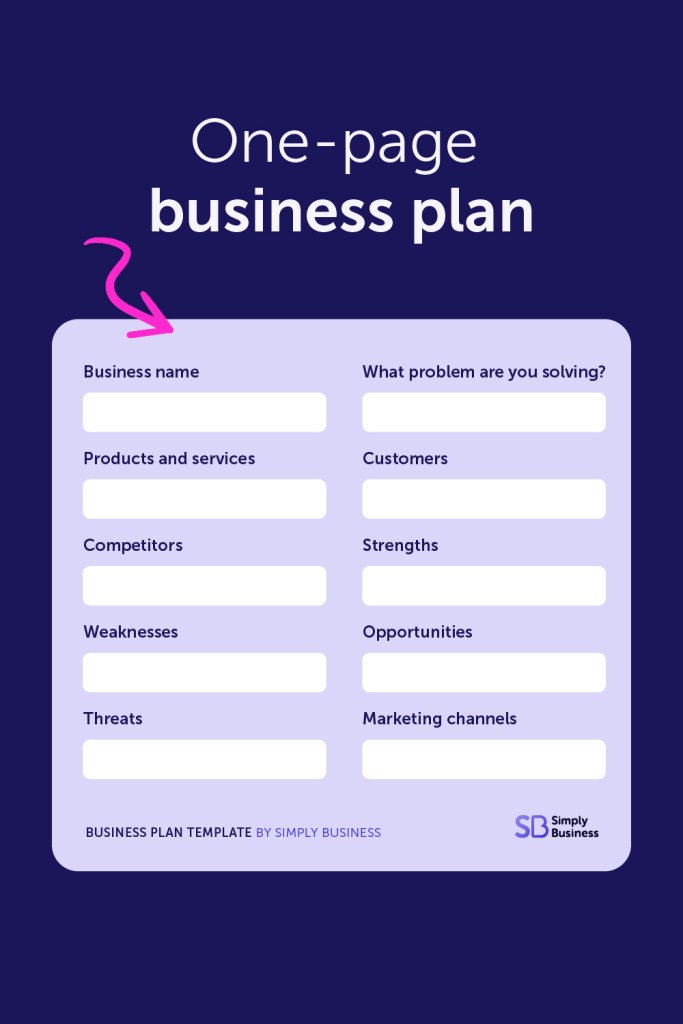
- One-page business plan: best for starting small or keeping things flexible. Use the template at the bottom of this page as a guide
Download a free business plan template
Use this free download to help you create a traditional business plan you can build on over time.
How to write a business plan (and make it work for you)
While Ben took a less conventional route, he still relied on core elements of business planning to validate his ideas. Follow these six steps to create a business plan that works for you.
1. Write an executive summary
The executive summary is a one-page overview that goes at the beginning of your document. It’s designed to hook readers with your idea and give a snapshot of your plan. Because it covers the entire scope of your strategy, it’s usually easiest to write this section last.
Your summary should clearly explain what makes you different, how you’ll market your ideas, and how much money you expect to make. If you’re looking for initial funding from investors, this page needs to convince them to back your vision.
2. Introduce your business
This is where you jump in and start talking about your specific idea. Here’s a basic structure you can try to introduce your business:
- the problem – what’s the need for your business? What’s the problem you’re solving, or what’s the opportunity? Why would people want what you’re selling?
- the solution – how are you solving the problem? What will your business do? How does it meet the needs you’ve identified? And importantly, how is it different?
- your history – how long has your business been established? If it’s new, what’s your experience in the sector or industry?
- business structure – who are its owners and what is its legal structure?
But what’s the number one rule of creating a business plan? If you’re in a rush and ready to get started, our short business plan video series covers everything you need to know in just three short videos.
3. Analyse the market
Here you explain industry trends and the competitors you’re up against. This section includes the market research you’ve carried out to validate your ideas. You need to identify your potential customers, figure out how to target them, and understand where they currently shop.
To prove there’s genuine demand for your product or service, back up your narrative with data. You can track shifting consumer interest using Google Trends, or pull official demographic data from the Office for National Statistics to define your target audience.
For Ben, researching the demographic of a new area was a crucial step before opening a coffee shop.
You should also look at your competition and list their advantages and disadvantages. This helps you figure out how to attract customers away from rival businesses.
4. Understand your financials
Financial planning is the backbone of any successful startup. You need to detail your numbers clearly, which is especially important if you’re looking for investment. Your financial section should include sales forecasts, the cost of goods sold, and a profit and loss forecast.
You should also include a cash flow statement and a balance sheet to show your overall financial health. Ben points out that even without a traditional business plan, you can’t go into things completely blind. He relies on basic financial projections and viability models to ensure every new location makes sense.
Ben’s tip: create your own financial model
We don’t have a conventional business plan because, in my opinion, as soon as you create one, it’s out of date. Financial planning is key, and you can’t go into things completely blind. But in our case, demographic and socioeconomic research of the area is what we base our decisions on.
Over time, we’ve built a model to determine the financial viability of any new location we open. First, we work out the potential revenue, by looking at:
- expected footfall
- the amount of transactions we could do in a day (for both on and off-peak hours)
- average spend per customer
This gives us a projected annual turnover we can actually stress-test rather than just hope for. It’s all assumptions, but the more locations we have, the more accurate our assumptions become.
Next, we look at costs, such as:
- food and beverage costs
- labour (we work to a max 35% target)
- rent
- business rates
- utilities
- and even the smaller stuff people forget like merchant fees, pest control, maintenance, and safety
We also consider the upfront investment required – fitting out a new shop, equipment, and working capital. It works out the payback period and whether or not a new launch is worth the initial investment.
The bit I find most useful is the breakeven analysis. It tells us exactly how many coffees we need to sell each day just to cover our costs. If that number feels unrealistic for the site, we don’t move forward with the project.
5. Complete a SWOT analysis
SWOT stands for strengths, weaknesses, opportunities, and threats. If you’re just starting out, this can help you drill down into the reality of your idea, and even helps you explain your business to investors.
You usually format a SWOT analysis in a four-square grid on a single page. Formatting the analysis in a grid helps you see how different elements of your business interact. It prompts you to ask how your strengths will help you capitalise on opportunities, and what weaknesses might amplify your threats. Completing a SWOT chart for your competitors can also reveal gaps in the market.
6. Consider strategy and execution
Now that you have done your market research, you can explain how you’re actually going to run your business. You should talk about your pricing strategy, your marketing channels, and how you will promote your product. You also need to outline your daily operations and location plans.
For Ben, execution means sticking to what he knows best while keeping an eye on fast-changing industry trends. When canning machines became popular, his team evaluated the trend and initially decided it wasn’t the right investment for their current locations.
Years later, when they opened a new branch, they realised they’d found the right demographic for the investment. Careful execution makes sure you don’t waste money on passing fads.
While your main business plan shouldn’t be overly long or complicated, you might have extra data that supports your strategy. Adding an appendix means that investors and team members can refer to this extra detail if they need to. This section is the perfect place for extra graphs, detailed tables, and market research notes.
3 top tips for planning your business growth
- Know your audience: Tailor your language to them – if you’re writing for an investor, focus heavily on validation data and financial returns.
- Keep it simple: Avoid turning in a massive document filled with complicated jargon, and use accessible language instead. Charts and graphs can present data more clearly than dense text.
- Stay adaptable: Learn to pivot when you need to. When Ben was approached to open a shop in a shopping centre, it didn’t fit his initial target demographic. However, he negotiated a good lease with get-out clauses, took a calculated risk, and discovered a new avenue for wholesale growth.
Business plan FAQs
How often should you update your business plan?
As your business grows, you should refer back to your guiding document regularly. As a minimum, you should review and update your strategy at least once a year.
Regular updates help you account for rising business rates, supply chain changes, and tax shifts. For example, you need to stay aware of how much corporation tax you owe as your revenue increases.
Do I need a business plan to start a business?
You don’t always need a formal business plan to start a business, but you do need a clear plan.
A formal business plan is most useful if you:
- need funding from investors or lenders
- want to bring on partners
- are launching a business with higher startup costs or more risk
- need a structured way to explain your business goals, market, and financial outlook
A smaller business plan may be enough if you:
- are starting small or testing a side business
- are focused on validating a business idea before investing more time or money
How long should a business plan be?
A business plan should be as long as it needs to be to clearly explain your business, and no longer.
In most cases:
- a one-page business plan works well if you’re testing an idea, starting small, or need a simple planning tool
- a traditional business plan is better if you’re pitching to investors, applying with lenders, or planning a more complex business
More guides for small businesses
- Going self-employed in the UK: a guide to get started
- Which bank has the best business bank account?
- How to register as self-employed
- Customer journey map template: why every business needs one
Get your business insurance sorted
We have over 800,000 customers plus a 9/10 satisfaction score. Why not take a look at our expert business insurance options – including public liability insurance and professional indemnity – and run a quick quote to get started?